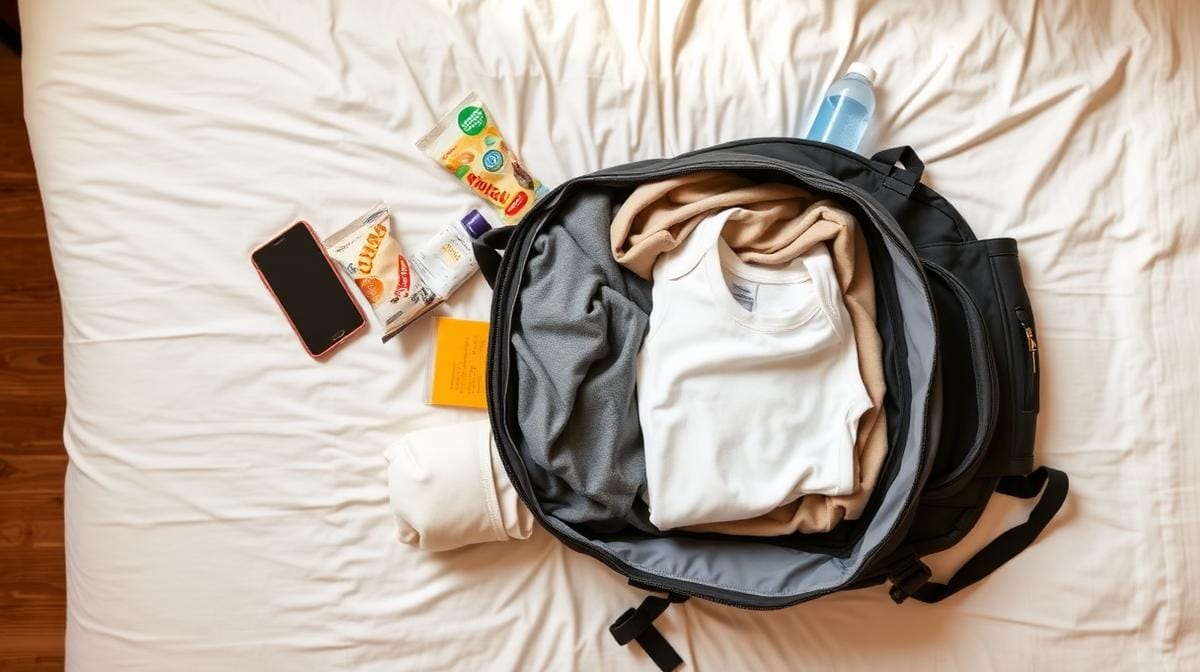
For your hospital bag, start with your phone and permitted charging equipment, the documents your unit requests, a change of clothes, toiletries, food and water, and any personal medicines you need. Add a small plan for transport and getting extra supplies. Use what you already own: a specialist bag or a pile of new gadgets is not required.
This checklist is for a dad or another birth partner supporting someone during labour and a hospital stay. It does not replace the maternity team's instructions or the birthing parent's own packing list. The NHS hospital bag guide is a useful UK starting point; follow your own hospital or birth centre's current advice wherever you live.
Check the hospital's arrangements first
A short call or a look at the unit's current information can prevent unnecessary packing. Save the maternity contact number and ask about anything you cannot confirm:
- Arrival: which entrance to use, including at night, and where your partner should go when the team asks them to attend.
- Documents: maternity notes, identification, registration or insurance information, where applicable. Do not assume every country or hospital needs the same paperwork.
- Staying: whether a birth partner can remain overnight, what seating or rest arrangements are available, and what happens if the stay is longer than expected.
- Food and equipment: what food is available, any food restrictions, and the rules for chargers, battery packs, music or other electrical items.
- Baby supplies: what the unit provides and what you need to bring, including nappies, clothes and any feeding supplies agreed with the team.
Hospital information can differ even within the same health system. For example, Hillingdon's packing guidance lists baby supplies to bring and suggests packing together so the birth partner can find things. Use local information to complete your list rather than assuming the hospital provides everything.
Pack your own essentials
Phone, contact details and permitted charging equipment
Charge your phone before leaving. Pack a compatible charger or battery pack only if permitted by the unit. Keep important numbers somewhere accessible as well as on the phone, and agree who will update family or arrange help. If you use a long cable, keep it out of walkways.
Requested documents and birth preferences
Agree who will carry the maternity notes, birth preferences and any paperwork the unit has requested. Know where to find them rather than asking your partner to search during labour. If you use digital records, check how to access them; do not assume a phone photograph will be accepted instead of a required document.
Comfortable clothes, footwear and toiletries
Pack a change of clothes, underwear and socks, with another set available if needed. Choose comfortable footwear and a small wash bag with your usual essentials. Adjust quantities to your circumstances and the available space; agree who can bring more if necessary.
Your own food, water and medicines
Take food and drinks that fit the unit's rules, your dietary needs and how you can store them. Do not depend entirely on a vending machine being open or working. Check the team’s advice before offering food or drink to your partner if they have been given specific instructions.
Include your own regular medicines, glasses or other personal essentials. Keep medicines in their packaging and ask staff about any storage or use rules that apply. This checklist is not a reason to change a dose or give someone else your medication.
Payment and a small note-taking option
Check how parking, public transport or a taxi can be paid for. Bring a suitable payment method, with coins only if useful locally. A notebook or notes app can hold questions, practical instructions and arrangements for collecting supplies.
Coordinate the shared and baby items
Pack together where possible. Agree who is bringing the baby's clothes, nappies, cleaning supplies and other items requested by the unit. Do not assume your partner has already handled everything, or buy a duplicate set without checking.
Ask the maternity team what feeding supplies are appropriate for your plans and what facilities are available. Match what you bring to the agreed feeding arrangements rather than buying every item on a general list.
If travelling home by car, arrange a suitable rear-facing infant seat and practise fitting it before the birth. Check both the seat and vehicle instructions, and seek trained fitting help if needed. The NHS car-seat guide explains suitability and fitting considerations. Check the relevant local rules and ask when the unit wants you to bring the seat in. If travelling another way, discuss the journey and discharge arrangements with the team.