Nobody prepares you for what happens to your marriage when a baby arrives. Sure, people joke about sleep deprivation and disappearing sex lives. But the real changes — the tectonic shifts in how you communicate, how you fight, how you love — those catch you completely off guard. Fatherhood changed my marriage in ways I never anticipated, and I think it's time we talked about it honestly.
My wife and I had been together for seven years before our son was born. We were solid. We communicated well. We had our routine, our rhythms, our easy shorthand for navigating life together. Then a 3.5kg human arrived, and everything we thought we knew about our relationship was thrown into a blender.
The First Three Months: Survival Mode
Those early weeks are a blur, but certain moments are seared into my memory. The 3am argument about whose turn it was to get up — whispered furiously over a screaming baby. The resentment I felt when she seemed to know instinctively what he needed and I didn't. The guilt when I went back to work and she was left alone, exhausted, with a newborn.
We weren't fighting about the baby, really. We were fighting about feeling unseen. She felt like I didn't understand what she was going through. I felt like I'd been demoted to supporting actor in my own family. Neither of us was wrong. But we were both too tired to see the other person's perspective.
Looking back, survival mode is aptly named. You're not thriving. You're not growing. You're just getting through each day, and your relationship takes the hit because it's the one thing you assume can wait.
The Resentment Trap
Here's what I wish someone had told me: resentment is the biggest threat to your relationship after kids, and it builds silently from both sides.
She resented that I got to leave the house, have adult conversations, eat lunch with two hands, and pee alone. I resented that I felt excluded from the mother-baby bond, that my attempts to help were corrected, and that our relationship had been relegated to logistics.
"Did you get nappies?" "The health visitor called." "He needs a bath." Our entire communication became transactional. We were co-managing a project, not nurturing a marriage. The romance didn't just take a back seat — it was locked in the boot.
The dangerous thing about resentment is that it feels justified. You're right to feel hard done by. And so is your partner. That's what makes it so corrosive — you're both suffering, but you're competing over who's suffering more instead of facing the problem together.
The Turning Point
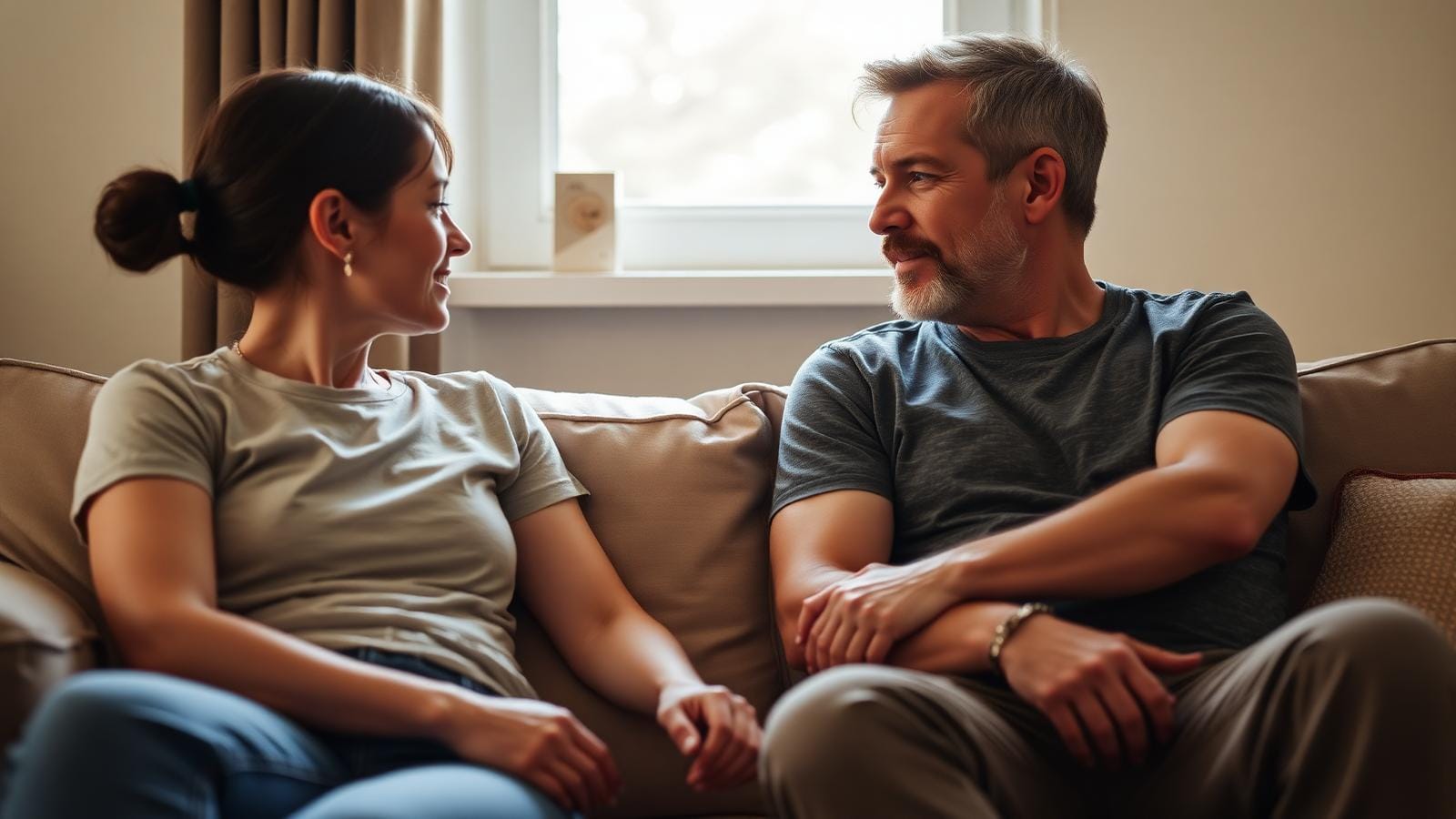
Our turning point came about four months in, during an argument about — of all things — how to load the dishwasher. She burst into tears. I burst into tears. And then we actually talked. Not about dishwashers, but about how lonely we both felt. How scared we were. How much we missed each other.
That conversation cracked something open. We realised we'd been treating our relationship like a machine that runs automatically, when in reality it needed more maintenance than ever. We decided to be intentional about our marriage, even when — especially when — it felt impossible.
What We Changed
1. We Scheduled Connection
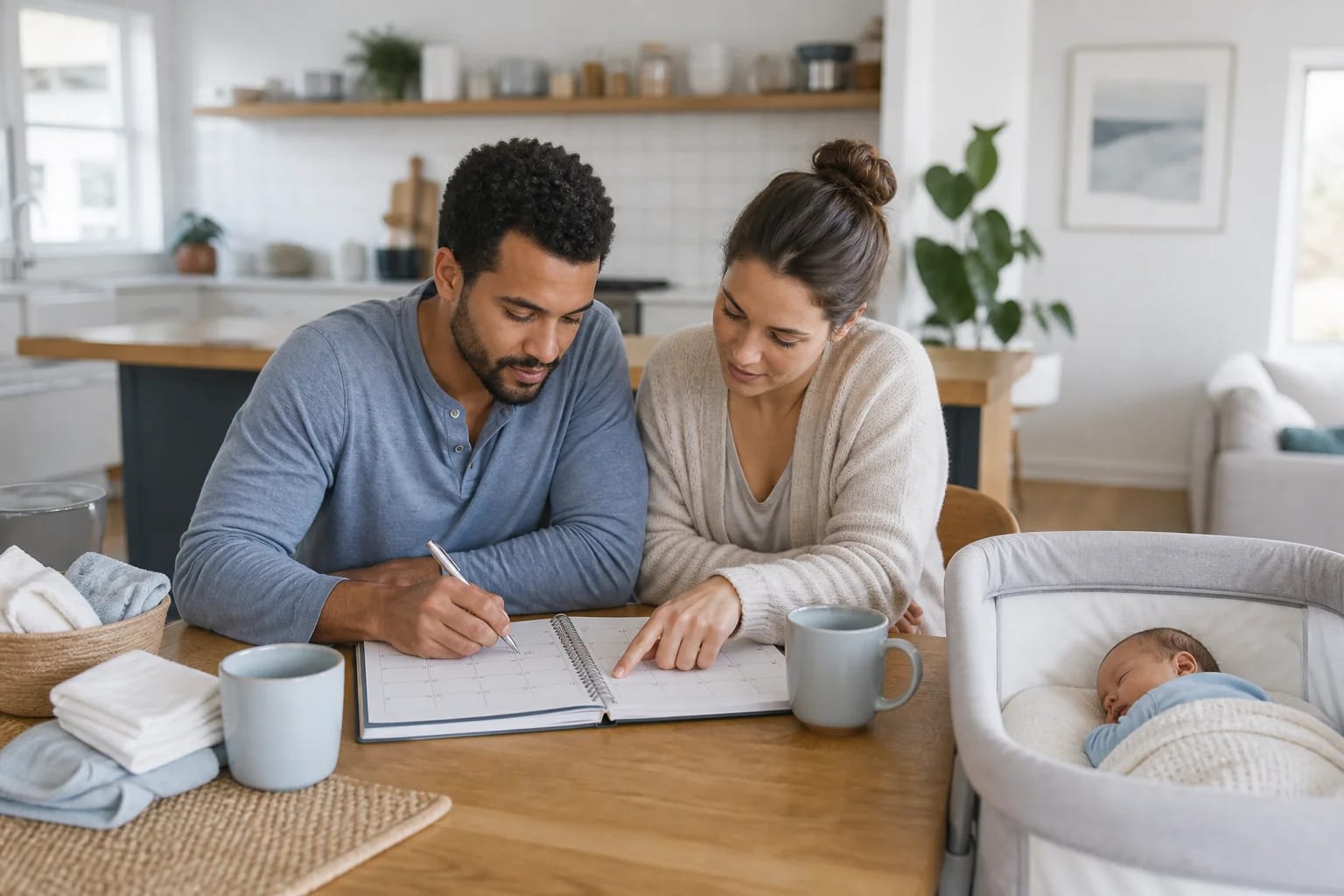
It sounds unromantic, but scheduling time together saved us. Every Thursday evening, after the baby was down, we had "us time." Sometimes it was a proper date — cooking together, watching a film, actually talking. Sometimes it was just sitting on the sofa in silence, existing in the same space without a baby between us. The point wasn't what we did. It was the commitment to showing up for each other.
2. We Stopped Keeping Score
The mental tally of who did more — who got up more, who changed more nappies, who sacrificed more — was poisoning us. We made a conscious decision to stop competing and start collaborating. Effective co-parenting communication became our priority.
This didn't mean everything was 50/50 every day. Some days she did 80% and I did 20%. Some days it was reversed. What mattered was that over time, it balanced out, and neither of us weaponised the imbalance.
3. We Learned Each Other's New Language
Pre-kids, love looked like spontaneous weekends away, lazy Sunday mornings, and long conversations over dinner. Post-kids, love looks different. It's making her a cup of tea without being asked. It's him taking the baby for an hour so she can shower in peace. It's texting "you're doing amazing" at 2pm on a Tuesday.
We had to learn to recognise these new expressions of love. They're smaller, quieter, and easier to miss — but they're no less meaningful.
4. We Asked for Help
We started seeing a couples' therapist. Not because our marriage was failing, but because we wanted tools to navigate this massive transition. It was one of the best decisions we've ever made. Having a neutral third party helped us understand patterns we couldn't see ourselves.
If therapy isn't accessible, even reading a book together — we liked "And Baby Makes Three" by John Gottman — can give you a shared framework for understanding what's happening to your relationship.
5. We Talked About the Hard Stuff
We talked about feeling like bad parents. About missing our old life. About how to keep our relationship strong after kids. About the fact that sometimes — whisper it — we regretted how hard this was, even though we loved our son fiercely.
These conversations were uncomfortable, but they were essential. Every time we shared something difficult, it brought us closer. Vulnerability isn't weakness in a marriage — it's the foundation.
The Better Part
I've talked a lot about the hard stuff, so let me be clear: fatherhood also made my marriage better in ways I couldn't have imagined.
Watching my wife become a mother gave me a new kind of love for her — deeper, more complex, rooted in admiration rather than just attraction. Seeing her patience, her strength, her ability to function on four hours of sleep while remaining kind — it made me fall in love with her all over again.
And she says the same about watching me become a dad. Seeing me figure out how to comfort our son, watching me learn to be gentle and patient when it didn't come naturally, seeing me try even when I got it wrong — that meant something to her.
We also developed a new kind of intimacy. Not just physical (though that came back, eventually, different but good), but emotional. We'd been through a crucible together. We'd seen each other at our worst and chosen to stay. There's a depth to that kind of partnership that you simply can't access without going through something hard together.
What I'd Tell Other Dads
If you're in the thick of it right now — exhausted, disconnected from your partner, wondering if your relationship will survive this — here's what I want you to know:
- It's normal. Almost every couple struggles after a baby. You're not broken. You're adapting.
- It gets better. Not automatically, but it does get better if you're both willing to work at it.
- Talk to each other. Not about logistics. About feelings. About fears. About what you need.
- Lower the bar. Your relationship doesn't need to be perfect right now. It just needs to be honest.
- You're on the same team. The enemy isn't your partner. It's exhaustion, unrealistic expectations, and the myth that this should be easy.
Fatherhood didn't ruin my marriage. It dismantled it and forced us to rebuild something stronger. The process was painful, messy, and unglamorous. But the marriage we have now — battle-tested, honest, deeply rooted — is better than the one we had before. Not because having a baby is magical, but because we chose to grow together instead of apart.
That choice is available to you too. Every single day.
When relationships change after kids, sometimes they change fundamentally — read our guide on co-parenting after separation for when that happens.
Need ideas for reconnecting with your partner? Browse our 15 date night ideas when you can't get a sitter.
For dads navigating parenthood solo after a relationship change, our single dad survival guide offers real, practical advice.