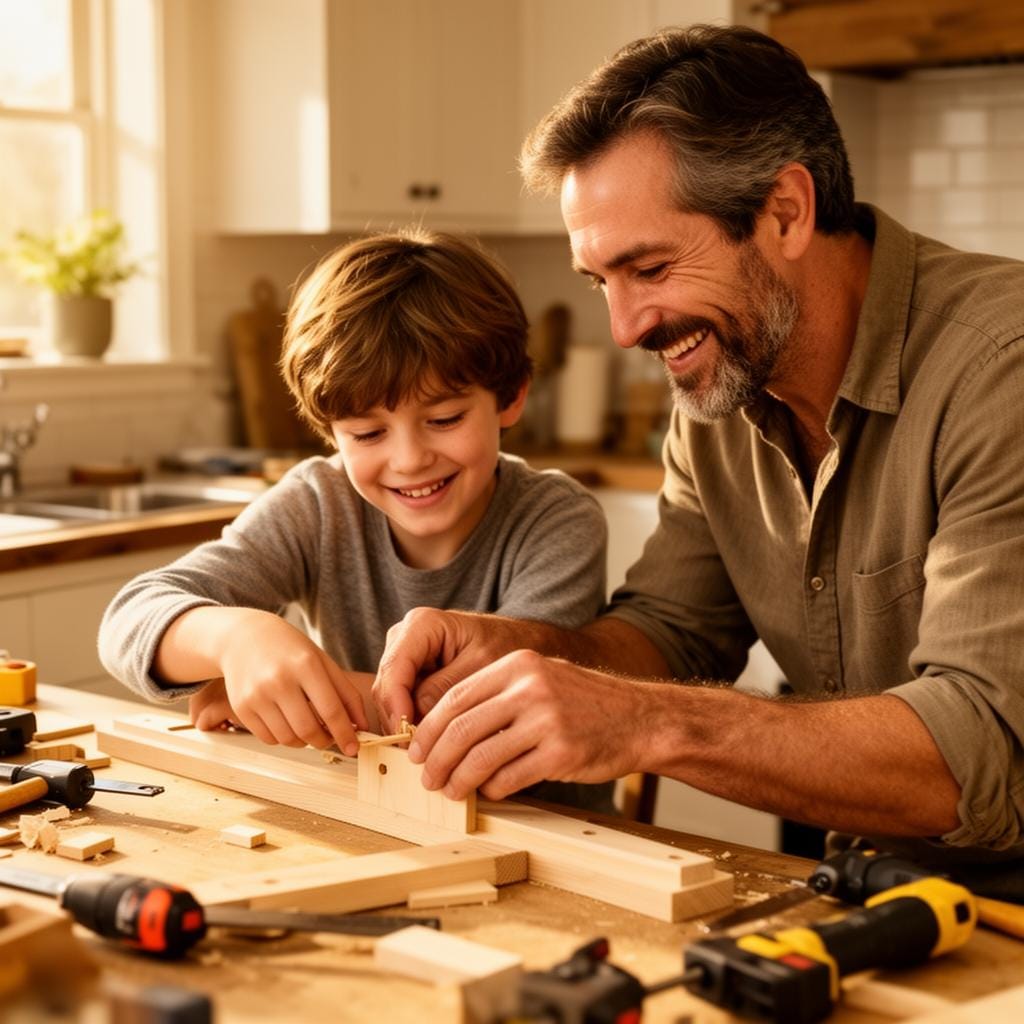
Becoming a stepdad is one of the most rewarding — and most underrated — roles a man can take on. There's no manual, no ceremony, and often no recognition. You're stepping into a family that already has its own rhythms, its own inside jokes, and its own history. And somehow, you're supposed to fit in.
The truth? Being a great stepdad isn't about replacing anyone. It's about showing up consistently, earning trust slowly, and loving kids who didn't ask for any of this either.
This guide pulls together honest, hard-won advice from stepdads who've navigated every awkward dinner, every "you're not my real dad" moment, and every quiet breakthrough.
The First Rule: You're Not Replacing Anyone
This is the foundation everything else is built on. No matter what the biological father's relationship looks like — present, absent, complicated — you are an addition, not a replacement.
Kids are remarkably perceptive. If they sense you're trying to take their dad's place, they'll resist. If they see you as a steady, caring adult who respects their existing family, they'll gradually let you in.
"The moment I stopped trying to be 'Dad 2.0' and just became 'James who's always there,' everything changed. My stepdaughter started coming to me on her own terms." — James, 41, stepdad for 5 years
Building Trust: The Long Game
Trust with stepchildren isn't built in grand gestures. It's built in hundreds of small, consistent moments:
- Keep your promises — if you say you'll be at the school play, be there
- Be predictable in a good way — kids who've been through family upheaval crave stability
- Show interest in their world — learn about their favourite games, music, or YouTubers
- Don't force affection — let hugs, high-fives, and "I love you" happen naturally
- Be patient with setbacks — a step forward followed by two steps back is normal
If you're feeling overwhelmed by the emotional weight of it all, you're not alone. Many stepdads experience feelings similar to dad burnout — and it's important to recognise it early.
The Discipline Question: Tread Carefully
This is where most stepdads stumble. Here's the consensus from family therapists and experienced stepdads:
Early stages (first 1–2 years)
- Let the biological parent handle discipline
- Support household rules without being the enforcer
- Think of yourself as a "friendly uncle" figure
Once trust is established
- Gradually take on more responsibility with your partner's support
- Always present a united front — never undermine each other
- Focus on natural consequences rather than punishment
The key phrase to remember: "I'm not here to boss you around. I'm here because I care about you and your mum."
Different Ages, Different Challenges
Toddlers and pre-schoolers (0–5)
The good news: younger children are often the most adaptable. They may accept you quickly — sometimes too quickly, which can feel overwhelming. Be warm, be present, and follow their parent's lead on routines. If you're curious about bonding strategies for little ones, check out how to explain big emotions to small kids.
Primary school age (6–11)
These kids understand what's happening. They might test you, ask tough questions, or compare you to their biological dad. Be honest at an age-appropriate level. Shared activities — building things, cooking together, sports — are your best bonding tools.
Teenagers (12–17)
The hardest age group for stepdads. Teenagers are already pushing boundaries with their biological parents; a stepdad can feel like an easy target. Don't take it personally. Focus on being a respectful adult presence. Sometimes the best thing you can do is simply not react.