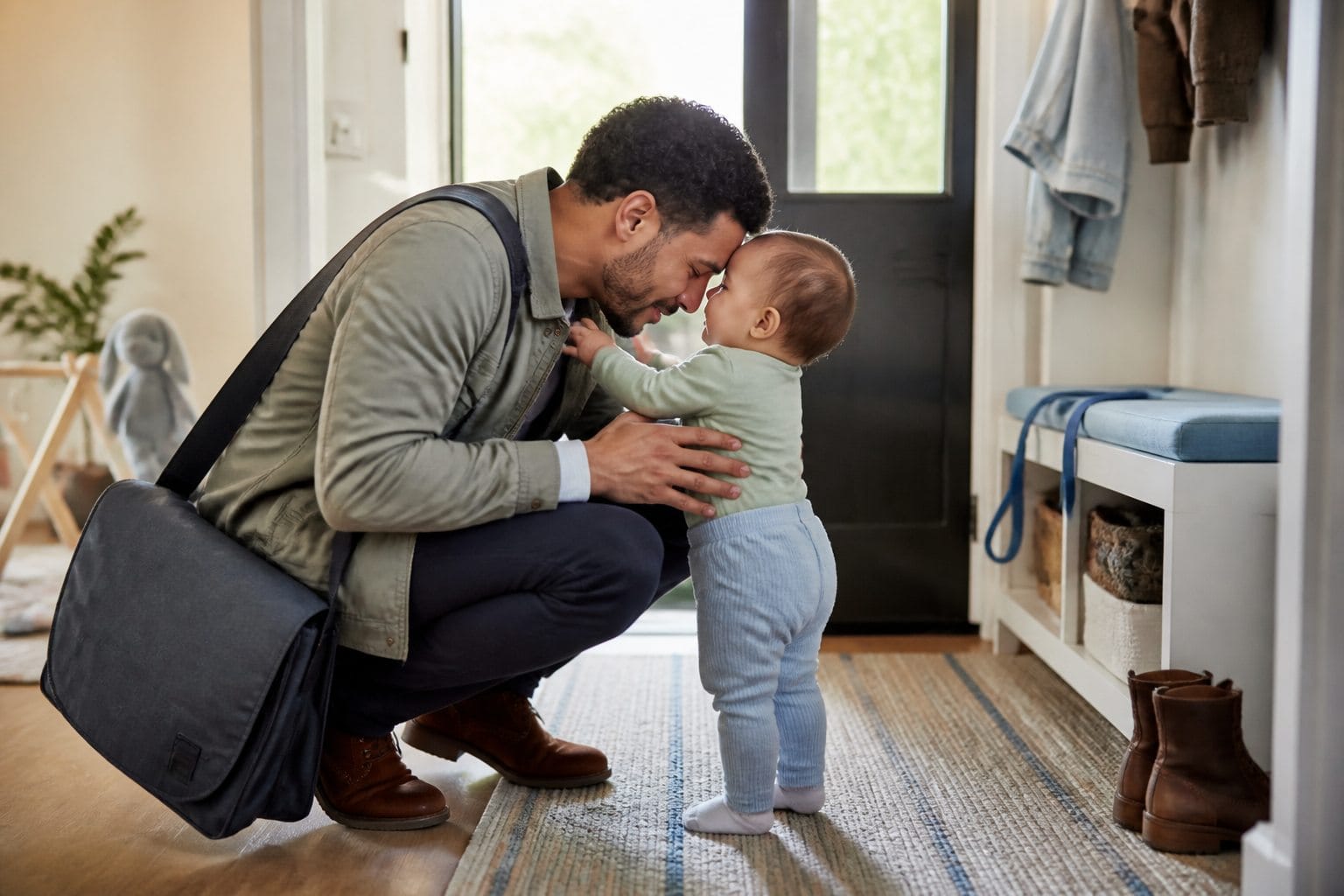
When I found out I was getting paternity leave, my first thought wasn't about bonding or diaper duty. It was: "Finally, I can catch up on sleep." Spoiler alert — that didn't happen. Not even close. But what did happen was something far more valuable, and I want to share the paternity leave tips every dad needs to hear before those weeks start ticking away.
Because here's the thing no one tells you: paternity leave goes fast. Alarmingly fast. One minute you're bringing the baby home, the next you're ironing a shirt for Monday morning wondering where the time went. If you don't go in with some kind of intention, you'll blink and it's over. So let's make sure that doesn't happen.
Forget the To-Do List (Seriously)
I know what you're thinking. "I'll have all this time at home — I should finally paint the nursery / fix the deck / organize the garage." No. Stop. Put down the sander. Your paternity leave is not a home improvement window. It's not a productivity sprint. It is, fundamentally, about three things: bonding with your baby, supporting your partner, and adjusting to your new reality.
That doesn't mean you'll do nothing practical — you will. You'll do more laundry than you thought humanly possible. You'll become intimately familiar with the dishwasher. But the big projects? They can wait. This time is sacred, and it's shorter than you think.
I talked about this adjustment period in The First 100 Days of Fatherhood — that initial stretch where everything is new, overwhelming, and somehow beautiful all at once. Paternity leave is the front door to that experience.
Learn the Baby Basics Before Day One
If you want to hit the ground running (or at least hit the ground at a slow stumble), learn the basics before the baby arrives. I'm talking about swaddling, bottle prep, bath time, safe sleep positioning — the unsexy fundamentals that will make you genuinely useful from the moment you walk through the door.
Too many dads default to "helper" mode during paternity leave, hovering around the edges while their partner does the heavy lifting. That's not partnership — that's spectatorship. You want to be the dad who can confidently handle a 3 a.m. feed so your partner can sleep. You want to be the one who says "I've got this" and actually means it.
YouTube tutorials, antenatal classes, even just watching the nurses at the hospital — absorb everything. The learning curve is steep, but it flattens fast once you commit.
Build Your Own Routines (Not Just Hers)
Here's where a lot of dads stumble: they fold themselves entirely into their partner's routine and never develop their own rhythm with the baby. But your relationship with your child is its own thing — separate, valuable, and worth nurturing on its own terms.
Find a routine that's yours. Maybe it's the morning feed. Maybe it's the post-lunch walk. Maybe it's the evening bath and bedtime story. Whatever it is, own it. Do it every day. Let the baby learn your smell, your voice, your particular way of doing things. That consistency builds a bond that will carry long after your leave ends.
Protect Your Partner's Recovery
Whether your partner had a vaginal delivery or a C-section, their body has been through something monumental. Paternity leave isn't just about the baby — it's about creating space for your partner to heal. That means taking on more than your "fair share" of household tasks. That means running interference when well-meaning visitors overstay their welcome. That means asking "what do you need?" multiple times a day and actually listening to the answer.
It also means watching for signs of postpartum depression or anxiety — in your partner and in yourself. If something feels off, don't dismiss it. Talk about it. Seek help. The stigma around perinatal mental health is fading, but it's still there, and dads are uniquely positioned to be the early warning system.
Accept Help (Yes, Even You)
You know that friend who keeps texting "let me know if you need anything"? Take them up on it. The casserole from your neighbor? Accept it with both hands. Your mother-in-law offering to do a load of laundry? Yes. Please. Thank you.
New parents — dads especially — have a tendency to project self-sufficiency. We've got it handled. We're fine. We don't need help. Except we do. Everyone does. Accepting help isn't weakness; it's wisdom. And it frees up your energy for the things that actually require your specific, irreplaceable presence: holding your baby, being with your partner, resting when you can.