Reviewed by Richard, dad of two — last updated May 2026.
Doing DIY with your kid is one of the most underrated dad activities going. It's screen-free, it teaches real skills, and there's a finished thing at the end that they made — which is worth more than any toy. The trick is matching the project to the age, so you don't end up frustrated and they don't end up bored or hurt.
Quick answer
Kids can start helping with DIY from age three with sanding, painting, and sorting. By 5–7 they can hammer and assemble simple projects like a birdhouse. By 8–10, supervised use of a drill or hand saw is fine. From 11+ they can co-build real things — shelving, a skate ramp, basic bike repair. The key is real tools, real outcomes, and one new skill per project.
What age can a kid actually start helping with DIY?
Three. Earlier than most dads assume. At three, fine motor skills are good enough for sanding a block, brushing on paint, and sorting screws by size. They won't be useful in any meaningful sense, but that's not the point — the point is the habit. Kids who grow up with a dad who lets them hold a screwdriver are the kids who, at twelve, can fix a wobbly chair without YouTube.
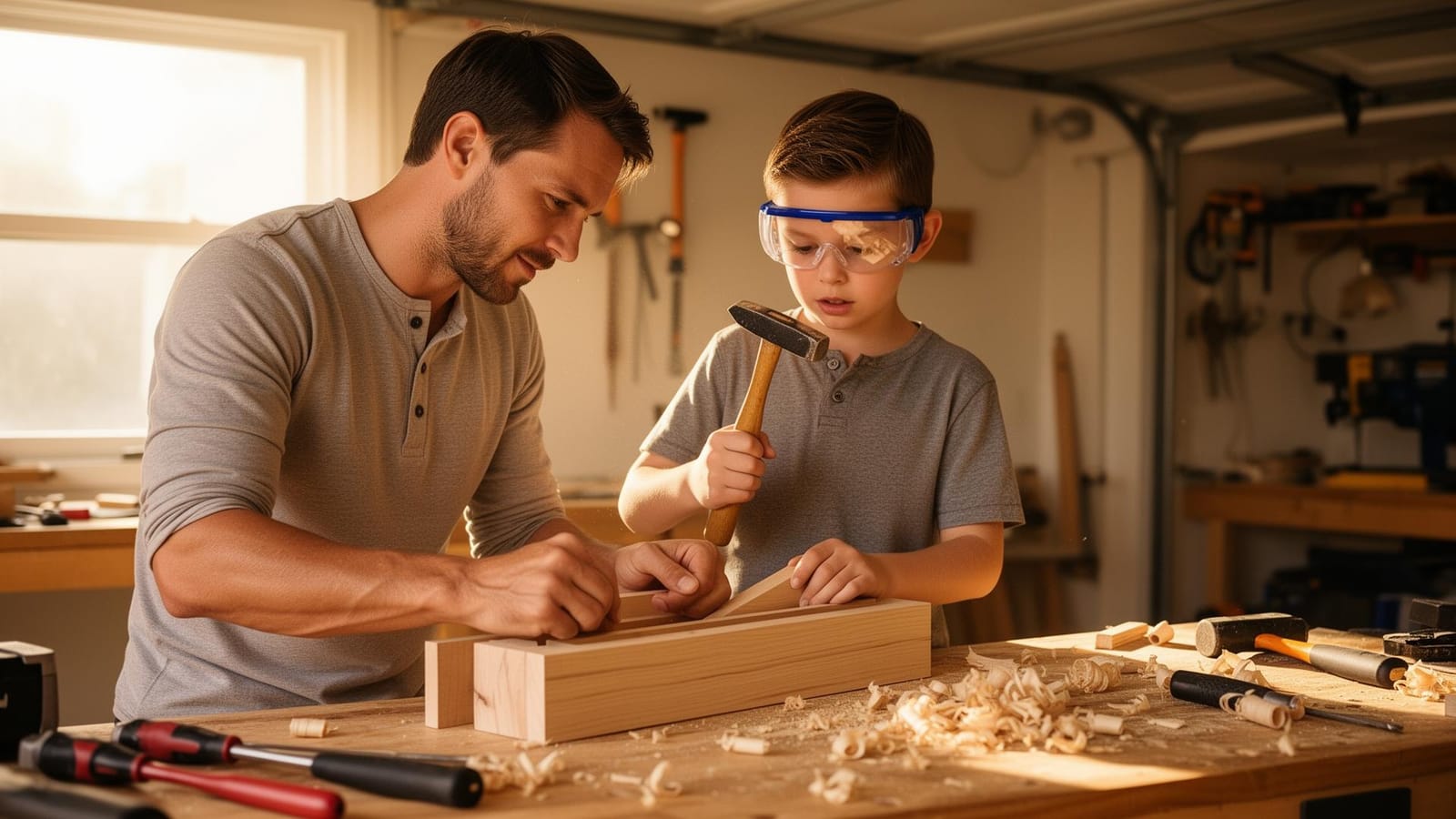
The two rules from age three onward: real tools, supervised (not plastic toy versions — kids see through the fakeness instantly) and safety glasses on, every single time. Make it a non-negotiable from day one and you never have to fight about it later.
Easy projects for ages 3–4
- Sanding station. Give them a block of softwood and a sanding sponge. They can sand for half an hour easily. Bonus: it builds grip strength.
- Painting a planter or stool. Tape off what shouldn't get paint, give them a small brush and one colour, and let them go. Kid-painted furniture is a keepsake.
- Sorting screws and nails. Empty the jar, ask them to sort by size into muffin tin cups. They love it. You finally have a tidy jar.
- Hammering golf tees into a pumpkin or foam block. Real hammer, soft target, brilliant first hammering experience.
Confidence builders for ages 5–7
- Birdhouse from a pre-cut kit. Hardware shops sell these for a few quid. They get to hammer real nails and paint the result.
- Picture frame. Mitre cuts done by you, sanding and gluing done by them, then they hammer in finishing nails.
- Plant a vegetable bed and build a name sign for it. Combines woodwork, painting, and patience.
- Replacing batteries and bulbs around the house. Sounds dull. Kids of this age love it because they finally get to use the screwdriver and "fix" something for real.
If you want more low-effort weekend wins, our weekend outdoor activities every dad should try guide pairs well with this — outdoor build projects double as a physical activity.
Real tools for ages 8–10
This is the age where DIY actually starts feeling collaborative. They can read a tape measure, follow a three-step plan, and concentrate for an hour. Supervised use of:
- Cordless drill (start with driving screws into scrap, then real projects)
- Hand saw (junior hacksaw or a Japanese-style pull saw — safer because cutting is on the pull stroke)
- Battery-powered sander
- Spirit level, tape measure, set square
Good projects: a planter box, a basic bookshelf, a step stool, a tool tote. Anything where they can take the finished thing home to their bedroom is a winner. Pair these projects with the kind of age-appropriate responsibility that compounds — kids who build their own shelf are kids who'll keep that shelf tidy.
Co-builder projects for ages 11+
By 11, the dynamic shifts. They're not "helping" anymore — they're building alongside you, sometimes leading. Projects that work at this age:
- A skate ramp or quarter pipe. Real woodwork, real outcome, instant payoff.
- Built-in shelving for their room — they design it, you supervise the cuts.
- Basic bike maintenance and repair. Fixing a puncture, adjusting brakes, indexing gears. Skills they'll use for life.
- A workbench for the garage — meta, but powerful: they're building the surface they'll build everything else on.
This is also the age to start letting them make real decisions and real mistakes. A wonky shelf they built themselves teaches more than a perfect shelf you built around them.