Reviewed by Richard, dad of two — last updated May 2026.
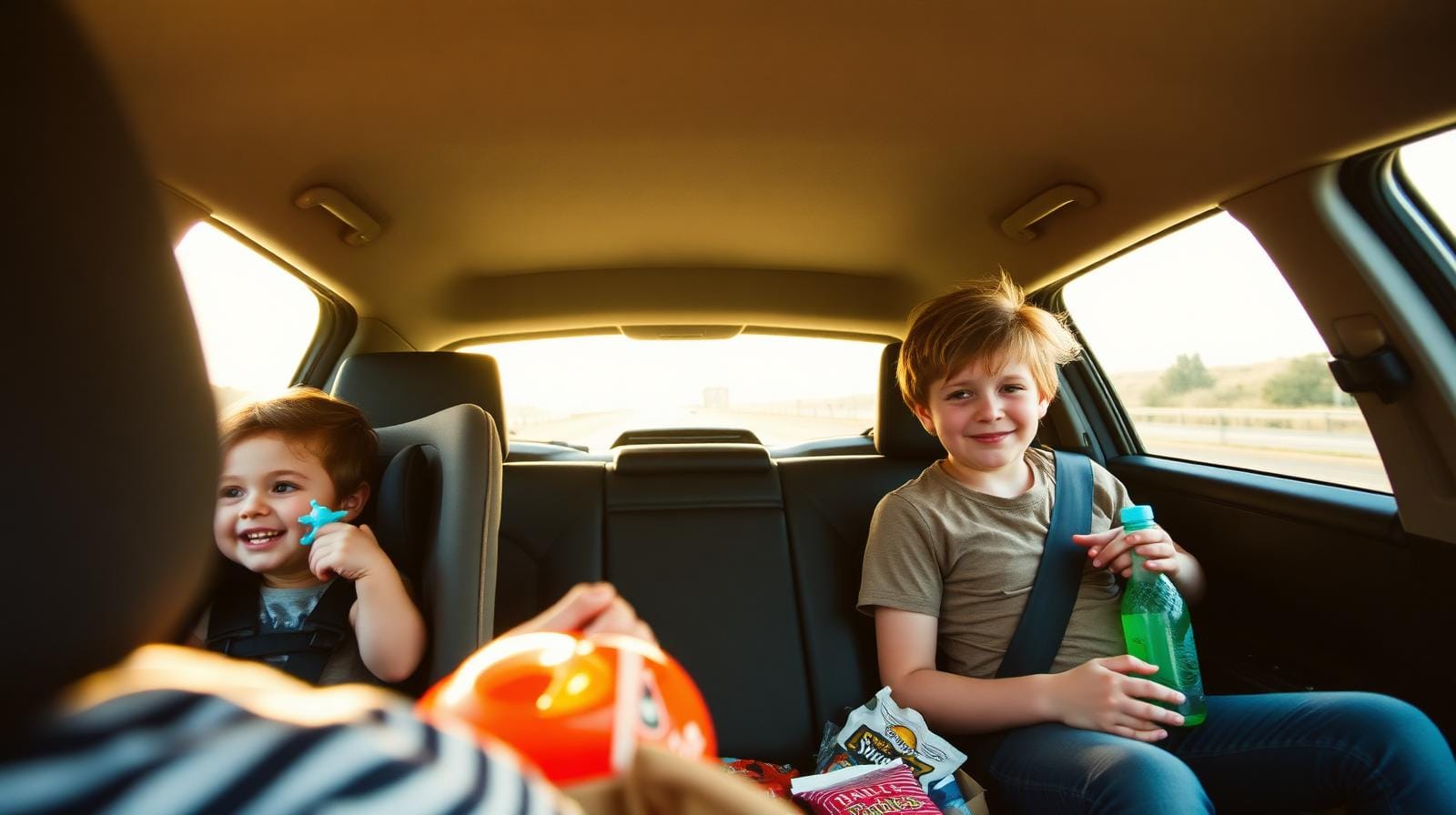
You've packed the boot, plugged in the postcode, and you're 14 minutes into a 6-hour drive when a small voice from the back seat says: "are we there yet?". Welcome to the long car ride with kids — equal parts logistics, diplomacy and snack management. Here's how to actually survive it (and maybe even enjoy it).
Quick answer
A successful long car ride with kids comes down to four things: stop every 90–120 minutes, pack snacks in single-portion bags, rotate three "novel" activities per kid, and leave at the right time (early morning or just before a nap). Screens are a tool — not the whole plan.
How long can kids realistically sit in a car?
Honest benchmarks, before they melt down:
- Under 1: ~90 minutes max in a rear-facing seat. Plan for proper out-of-the-seat breaks every 1–2 hours; long stretches are linked to breathing risk in infant car seats.
- 1–3 years: 2 hours of "happy", then it goes downhill fast.
- 4–7 years: 2.5–3 hours if you've got entertainment dialled in.
- 8+: 3–4 hours, especially with their own headphones.
If your trip is longer than this — and most family road trips are — you're not aiming to drive it in one shot. You're aiming to break it into chapters.
How often should you stop on a road trip with kids?
The dad-tested rule: every 90–120 minutes, get them out of the car for at least 15 minutes. Not "stop and refuel and immediately drive on" — actually unbuckle them, let them run, eat something, use the loo.
Service stations are fine. Even better: a quick detour to a roadside park, a McDonald's with a play area, or a town high street where they can walk for ten minutes. The 15 minutes you "lose" you'll easily save by not having to manage a meltdown 40 miles later.
What actually entertains kids in the car (by age)?
Three rules: rotate, ration, and one screen-free option per stretch.
Toddlers (1–3): A "surprise bag" with 4–5 small items they haven't seen before. Wrap each one in tissue paper. Hand out one per hour. Finger puppets, stickers, a chunky board book, a small soft toy. Magic.
4–7: Audiobooks are the dad's secret weapon — "Dirty Bertie", "Horrid Henry", "The Worst Witch", any David Walliams. Spotify and Audible both have huge kids' libraries. Pair with a magnetic drawing board and a window-search game ("first to spot 5 red cars").
8+: Headphones, a podcast they like (the BBC's "Newsround" or "Five Minutes with Dad"), a sketchpad, and yes, screens — but with a deal: 30 minutes screen, 30 minutes off, then the next round. Not a free-for-all.
For non-car-based ideas they'll still be talking about, see our DIY projects by age piece.
The snack strategy that prevents a meltdown
Snacks are not just food in the car. They're structure. Three principles:
- Pre-portion everything. One ziplock per kid per stop. They get the bag at the stop, not before. (Kid-controlled supply = empty bag in 8 minutes + sugar crash + fight with sibling.)
- Mix textures. Something crunchy (rice cakes, breadsticks), something soft (banana, cheese cubes), something hydrating (cucumber, grapes — quartered for under 4s).
- Skip the sugar bombs. Sweets and fizzy drinks in a confined space lead to two outcomes: sugar-crash whining and motion sickness. Save the treat for the destination.
Bonus: a "first stop only" snack gives them something to look forward to in the first 90 minutes.
How to handle motion sickness, fights, and "are we there yet?"
Motion sickness: seat them as far forward as the car seat rules allow, crack a window for fresh air, avoid screens (worst trigger), and offer plain crackers and small sips of water. Ginger biscuits genuinely help. If your child is repeatedly sick on every car journey, talk to your GP — there are kid-safe options.
Fights between siblings: physical separation works (one each side of a middle gap if you can), and so does a "5-minute silence challenge" with a small reward. Most back-seat fights are about boredom, not the actual triggering crime.
"Are we there yet?": answer once with the real time, then redirect to a game. The "alphabet game" (find something out the window starting with A, then B…) genuinely eats 30 minutes.
For more rainy-day-style indoor entertainment when the trip is over, our rainy day activities guide covers what to do once you arrive.
The dad packing list nobody tells you about
The boring stuff that saves the day:
- A roll of kitchen towel (not tissues — kitchen towel)
- A spare full change of clothes per kid, in a separate bag you can grab in 10 seconds
- Two empty plastic bags (one for rubbish, one in case someone is sick)
- A travel potty for under-5s — there will not always be a service station
- Phone car charger for both adults
- One physical map or printed route — for the moment satnav decides to die in a tunnel
- Ibuprofen and Calpol/children's paracetamol
- A water bottle each, refilled at every stop
For the safety side — car-seat fitting, headrest position, the lot — the NHS guide on car seats for children is the cleanest summary in plain English.
The mental game
Here's the dad part nobody talks about: a long drive with kids is also a test of your patience. The single biggest variable in how the journey goes is your tone of voice when something goes wrong at hour four. Caffeinate properly. Eat a real breakfast. Agree with your partner who is "on shift" for back-seat duty. And remember — you'll forget the meltdown by next week, but you'll remember the moment you all sang along to the same song at the top of your lungs for the next ten years.
Try this on your next drive: set one rule before you pull out of the drive — "first proper stop is at exactly 90 minutes, no negotiations". Tell the kids. Stick to it. The rhythm alone will save you.