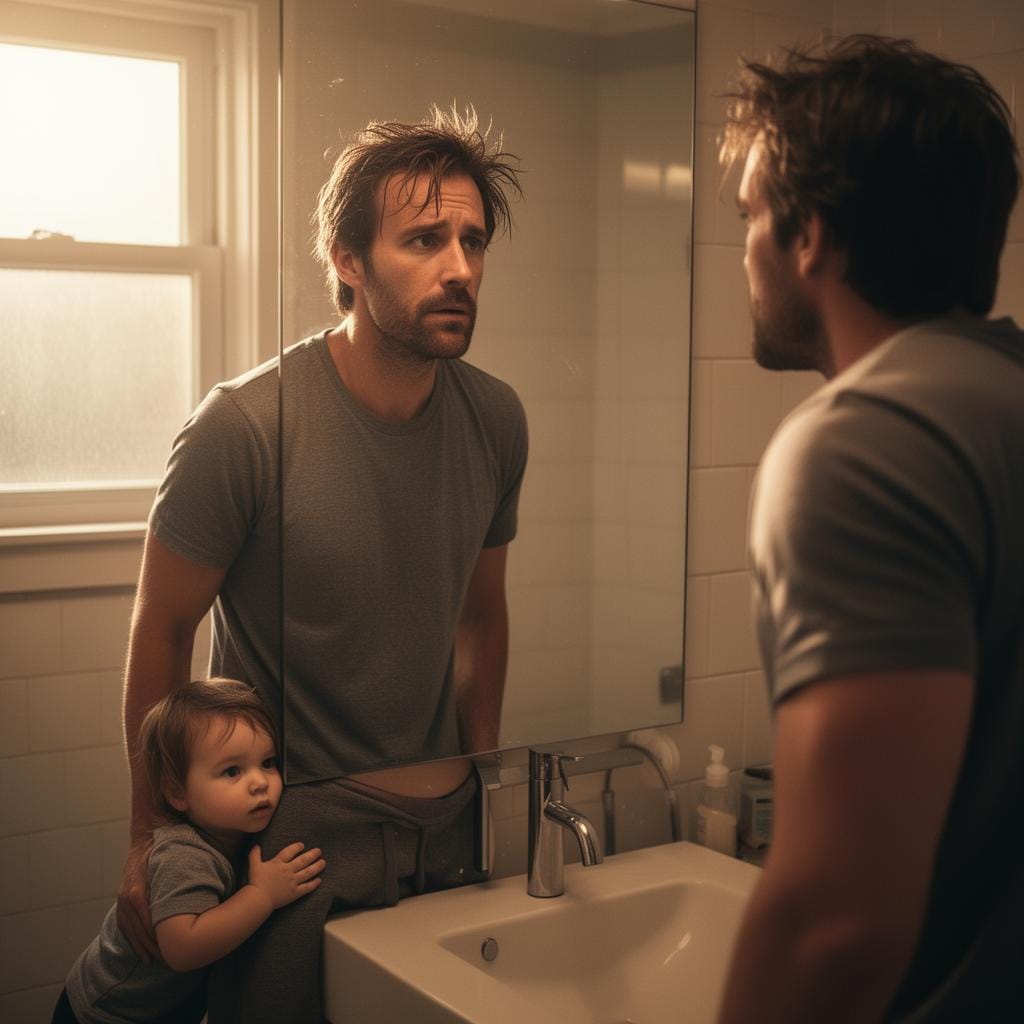
A tired father looking at himself in the bathroom mirror while his toddler holds onto his leg
Health & Wellness

5 Warning Signs You're Neglecting Your Health as a Dad (And How to Fix It)

Richard7 min read

Part of our Mental Health and Dad Wellbeing guide collection.

Let me paint a picture you might recognise. You wake up exhausted — again. You skip breakfast because the kids need feeding first. You cancel that GP appointment because it clashes with the school run. And when someone asks how you're doing, you say "fine" without even thinking about it.

Sound familiar? You're not alone. According to the NHS, men are significantly less likely than women to visit a doctor or seek preventive care — and fathers are among the worst offenders. We're so busy looking after everyone else that we forget to look after ourselves.

But here's the thing: your health isn't just about you anymore. Your kids need you around — not just for the next school play, but for decades to come. So let's talk about the dad health warning signs that too many of us ignore, and what you can actually do about them.

Why Dads Are So Bad at Looking After Themselves

Before we get into the warning signs, it's worth understanding why this happens. It's not that dads don't care about their health — it's that fatherhood creates a perfect storm of neglect:

  • Time scarcity — Between work, childcare, and household responsibilities, personal health drops to the bottom of the priority list
  • Identity shift — Many dads stop seeing themselves as individuals with needs and become purely "the provider"
  • Normalisation of exhaustion — Tiredness becomes so constant that it stops registering as a problem
  • Social conditioning — Men are still socialised to "push through" rather than seek help

Research from the American Psychological Association confirms that men who become fathers often experience a measurable decline in self-care behaviours within the first two years of parenthood. The good news? Awareness is the first step to change.

Warning Sign 1: You Can't Remember the Last Time You Weren't Tired

Yes, all parents are tired. That's practically a universal truth. But there's a difference between normal parenting fatigue and the kind of bone-deep exhaustion that never lifts — even after a decent night's sleep.

If you're waking up tired, dragging yourself through the day, and collapsing into bed only to lie there wired, something deeper might be going on. Chronic fatigue in dads can signal:

  • Sleep apnoea (especially if you snore heavily)
  • Iron deficiency or thyroid issues
  • Burnout or depression (more on this below)
  • Poor nutrition compounding sleep debt

What to do about it: Start by tracking your sleep for a week — not just hours, but quality. If you're getting 7+ hours and still feeling wrecked, book a blood test with your GP. It's a 10-minute appointment that could change everything. And if you haven't already, read our guide on nutrition for dads who are too tired to cook — what you eat directly impacts how you sleep and recover.

Warning Sign 2: You're Surviving on Kids' Leftovers and Coffee

Here's a scenario that plays out in homes across the country: you spend 20 minutes preparing a balanced meal for the kids, then eat their leftover fish fingers standing up at the kitchen counter while scrolling your phone. Breakfast? Coffee. Lunch? Whatever's fastest. Dinner? Whatever the kids didn't finish.

The British Heart Foundation notes that irregular eating patterns and poor nutrition are significant risk factors for cardiovascular disease — and dads in the 30-45 age bracket are particularly vulnerable because they often don't see themselves as "at risk."

Red flags to watch for:

  • You can't remember the last time you ate a proper breakfast
  • Your diet is mostly beige (bread, pasta, crisps, biscuits)
  • You're drinking more than 4 coffees a day to function
  • You've gained weight steadily since becoming a dad but haven't addressed it

What to do about it: You don't need a complete diet overhaul. Start with one change: eat breakfast before the chaos begins. Even a bowl of porridge with banana takes 3 minutes and gives you sustained energy. Build from there. If you need practical ideas, our dad nutrition guide has meal suggestions that take under 10 minutes.

Warning Sign 3: Your Body Has Become a Stranger

You used to play football on weekends. Or go to the gym. Or at least walk regularly. Now the most exercise you get is carrying a screaming toddler up the stairs.

Physical inactivity creeps up on dads gradually. The World Health Organisation recommends at least 150 minutes of moderate exercise per week for adults, but studies suggest that new fathers' activity levels drop by an average of 30% in the first three years of parenthood.

The warning signs aren't always obvious:

  • Getting winded going up stairs
  • Persistent back or neck pain from carrying kids and hunching over devices
  • Feeling stiff when you wake up
  • Avoiding physical activities you used to enjoy because they feel too hard now

What to do about it: Forget the gym membership you'll never use. The best exercise for dads is the exercise that actually happens. A 15-minute bodyweight routine at home, a walk with the pushchair, or playing tag in the garden all count. We put together a complete no-gym exercise routine for busy dads that fits around real life.


Warning Sign 4: You've Stopped Feeling Things Properly

This one catches dads off guard because it doesn't look like a health problem. It looks like coping. You stop getting excited about things. You go through the motions with the kids but don't feel the joy you know should be there. You become irritable over small things but can't access deeper emotions.

Emotional numbness in dads is more common than most people realise. The APA reports that up to 1 in 10 fathers experience postnatal depression, and the rates are even higher for dads of toddlers and school-age children. But because male depression often manifests as irritability, withdrawal, or numbness rather than sadness, it goes undiagnosed.

Signs you might be struggling:

  • You feel like you're watching your life from the outside
  • Small frustrations trigger disproportionate anger
  • You've lost interest in hobbies, friendships, or intimacy
  • You're drinking more than you used to, or using screens to zone out

What to do about it: Talk to someone. That might be your partner, a mate, or a professional. The NHS Talking Therapies service offers free support, and self-referral means you don't need to go through your GP if that feels like a barrier. If you're not ready for that step, start by reading our piece on why dads need to stop saying "I'm fine".

Warning Sign 5: You Haven't Seen a Doctor in Years

When was your last check-up? Not a visit because you were ill — an actual preventive health check? If you're like most dads, the answer is "I can't remember" or "before the kids were born."

The NHS Health Check programme offers free checks for adults aged 40-74, but men under 40 — especially new fathers — often fall through the gaps entirely. And yet this is the age when early detection of issues like high blood pressure, diabetes risk, or cholesterol problems can make the biggest difference.

What to do about it: Book a GP appointment this week. Not next month. This week. Ask for a general health check including blood pressure, cholesterol, blood sugar, and a mental health screen. Most surgeries can do this in a single 15-minute appointment. Put it in your calendar right now — your kids' future depends on you being around for it.

The 5-Minute Health Reset for Dads

You don't need to transform your entire lifestyle overnight. Here's a realistic starting point — five small changes that take minimal time but create compound benefits:

  1. Drink a glass of water before your first coffee — Dehydration amplifies fatigue and brain fog
  2. Eat something real for breakfast — Even toast with peanut butter beats nothing
  3. Move for 10 minutes a day — A walk, some stretches, playing with the kids outside
  4. Set a phone curfew — No screens 30 minutes before bed improves sleep quality dramatically
  5. Book one appointment — GP, dentist, optician — whatever you've been putting off longest

These aren't dramatic changes. They're the kind of small, sustainable habits that stack up over weeks and months into genuinely better health.

You Can't Pour From an Empty Cup

I know that phrase is overused, but it's overused because it's true. Every time you skip a meal, ignore a symptom, or cancel that appointment, you're drawing down on reserves that aren't unlimited. Your kids don't need a perfect dad — but they do need a present one. And "present" means more than just being in the room. It means having the energy, the emotional bandwidth, and the physical health to actually show up.

Start with one warning sign from this list. Just one. Address it this week. Then build from there. Your future self — and your kids — will thank you for it.

Frequently Asked Questions

Why do dads neglect their health?

Dads often neglect their health due to time pressure, prioritising family needs over personal care, normalising exhaustion as part of parenthood, and social conditioning that discourages men from seeking help. Research shows fathers experience a measurable decline in self-care within the first two years of parenthood.

What are the signs of burnout in fathers?

Key signs include chronic exhaustion that doesn't improve with sleep, emotional numbness or irritability, loss of interest in hobbies and relationships, poor eating habits, physical inactivity, and avoiding medical appointments. If you recognise several of these signs, seek support from your GP or a mental health professional.

How can busy dads stay healthy?

Make small, consistent changes: eat a proper breakfast, stay hydrated, do 10–15 minutes of daily movement (even playing with kids counts), set a screen curfew before bed, and schedule regular health check-ups. Sustainability beats perfection.

How often should dads get a health check-up?

Aim for a general health check at least once a year, covering blood pressure, cholesterol, blood sugar, and mental health screening. The NHS offers free Health Checks for adults aged 40–74, but younger dads should proactively book check-ups through their GP.

R

Written by

Richard

Dad of two and a member of the DadConnect editorial team. Richard writes from a father's perspective and is not presented as a medical professional.

Share:

Join a Community of Dads Like You

Connect with fathers who understand your journey, share real experiences, and find support whenever you need it.

Download DadConnect
Download on the App StoreGet it on Google Play
Fathers spending meaningful time with their children