A good rainy-day plan does not need expensive supplies or a minute-by-minute schedule. Choose one active activity, one creative activity and one calmer option, then let your child help decide the order. The 15 ideas below are screen-free, practical for ordinary homes and designed for dads to join in rather than supervise from the side.
If you need ideas for a particular age, start with the quick chooser. For more ways to create useful time together, explore the Activities and Bonding guide collection.
Quick Rainy-Day Activity Chooser
| What you need | Try this | Preparation |
|---|---|---|
| High-energy play | Obstacle course, dance and yoga, balloon volleyball or Dad Olympics | 5–10 minutes |
| Creative time | Cardboard engineering, drawing and letters, or a puppet show | 5–15 minutes |
| A calmer reset | Story building, board games or indoor camping | Under 10 minutes |
| A longer project | Blanket fort, kitchen science or baking | 15–30 minutes |
| Very few supplies | Treasure hunt, dance party or story building | Under 5 minutes |
Building and Creating
1. Build a Blanket Fortress
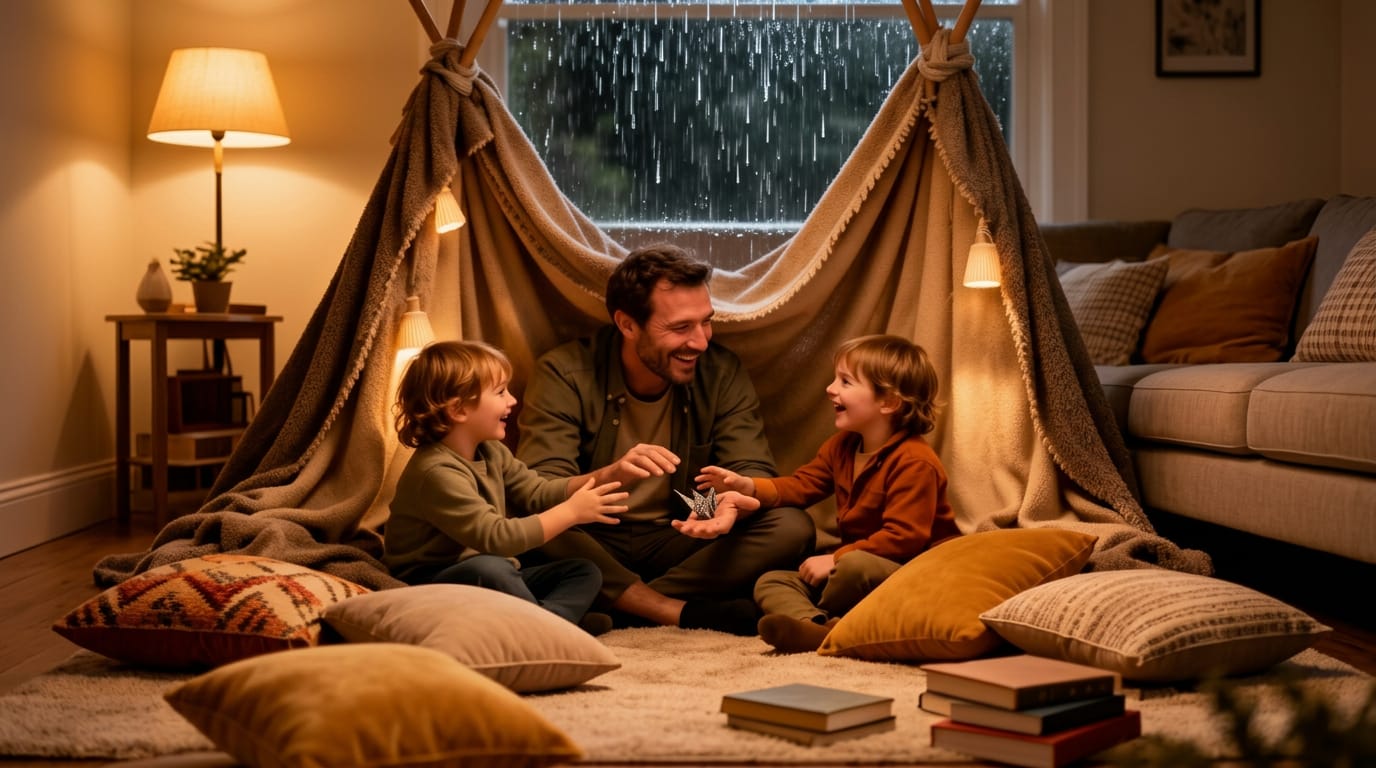
Drape blankets over dining chairs or a sofa, use cushions for walls and let the children decide where the entrance, reading corner and “kitchen” should go. A torch, books and a snack can turn the finished fort into a place for the next activity too.
For toddlers, keep the structure low and simple. Older children can draw a plan first, test which supports are stable and improve the design with you. Keep fabric away from heaters, lamps and anything that could tip.
2. Try Cardboard-Box Engineering
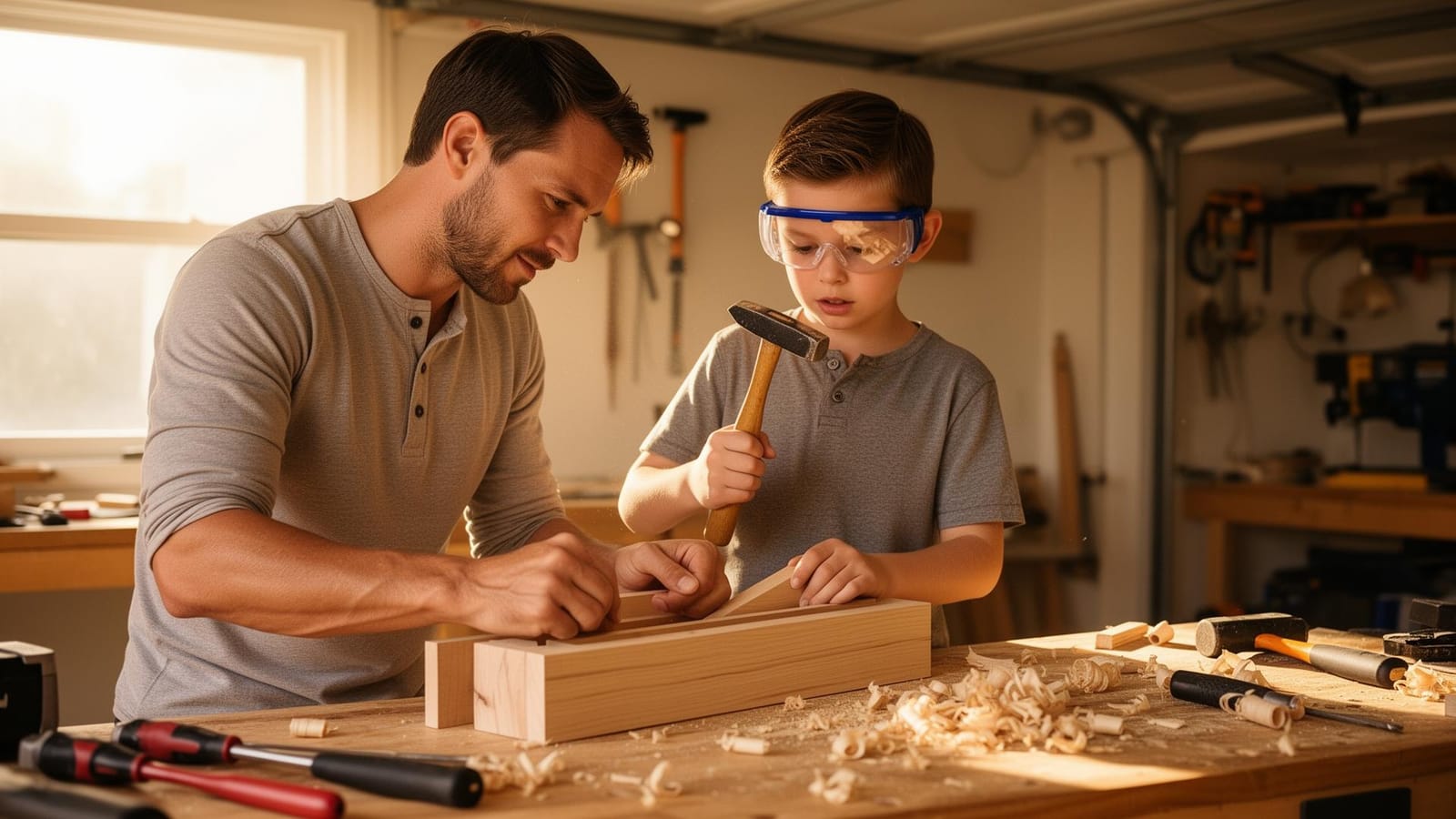
Offer a few boxes, paper tape, washable markers and age-appropriate scissors. Build a vehicle, robot, shop, castle or puppet theatre. Dad can help with safe cuts and structural joins while the children make the creative decisions.
Variation: turn cardboard tubes and folded channels into a marble run. Use a large soft ball for younger children because marbles are a choking hazard, and attach the run to boxes rather than painted walls.
3. Design an Indoor Obstacle Course
Use cushions as stepping stones, painter's tape as a balance line and a table as a crawl-under section. Let each child design one stage, then take turns completing the course. Compete against your own previous time rather than making siblings compete with each other.
Clear sharp furniture edges, avoid slippery landings and adapt every movement to the child's age and ability.
Kitchen and Science
4. Run a Simple Family Bake-Off
Choose a forgiving recipe such as banana bread, cookies or simple rolls. Children can count spoonfuls, stir, shape or decorate while an adult handles the oven and hot equipment. The result does not need to look perfect; the useful part is completing a shared task.
The NHS Healthier Families recipes provide additional family meal ideas. Our healthy meals guide also includes practical options for cooking with children.
5. Make Personal Pizzas
Use ready-made bases or dough and place a small selection of toppings in bowls. Each person makes one pizza, names it and explains the design. This gives children a manageable choice without turning the kitchen into an unlimited buffet.
Follow ordinary food-hygiene guidance, supervise knives and ovens, and choose toppings that are appropriate for the child's age.
6. Open a Kitchen Science Lab
Choose one simple experiment using household materials. Try a baking-soda reaction, colour movement in milk, lemon-juice “invisible ink”, cornflour and water, or a balloon rocket running along a string. Ask the child what they think will happen before you start and what changed afterwards.
Use instructions from a reliable education source such as STEM Learning's primary resources. An adult should check every material, protect eyes and surfaces, prevent tasting and avoid recipes involving borax or other unsuitable chemicals.
Active Indoor Play
7. Combine a Dance Party With Animal Yoga
Take turns choosing a song and add a freeze rule whenever the music stops. When everyone needs to slow down, switch to parent-led animal poses: stretch like a cat, balance like a flamingo or curl up like a hedgehog. Printed pose cards or your own prompts keep the activity screen-free.
8. Create a Treasure Hunt
For younger children, ask them to find something blue, soft, round or noisy. For older children, write short riddles leading from one location to the next. The final “treasure” can be choosing lunch, selecting the next game or finding a note from Dad rather than receiving a new toy.
9. Play Balloon Volleyball or Indoor Bowling
Stretch a piece of string between two safe points and use a balloon as a slow-moving volleyball. If a balloon is unsuitable for your child's age, roll up soft socks instead. For bowling, arrange empty plastic bottles and roll a soft ball from a marked line.
Supervise balloons because broken pieces can be a choking risk, move breakables out of the play area and never use hard projectiles indoors.
Creative and Quiet Activities
10. Build and Record a Family Story
Start with one sentence, then take turns adding what happens next. Write the result down, illustrate it or record the child telling the finished story. If you use a phone, put it in airplane mode, record together and put it away when the story is complete; the device is a short creation tool, not the activity itself.
11. Draw, Collage or Write a Letter
Give each other funny drawing prompts, make a collage from old packaging or create a postcard for a grandparent, relative or friend. Dad should make something too. Children see that creativity is participation, not a performance they are being judged on.
For age-specific hands-on options, see our toddler activities for dads.
12. Put On a Puppet Show
Use socks, paper bags or cardboard figures and turn the sofa or a box into a stage. Give each character one simple goal and improvise a short scene. Children who do not want to perform can make tickets, scenery or sound effects.