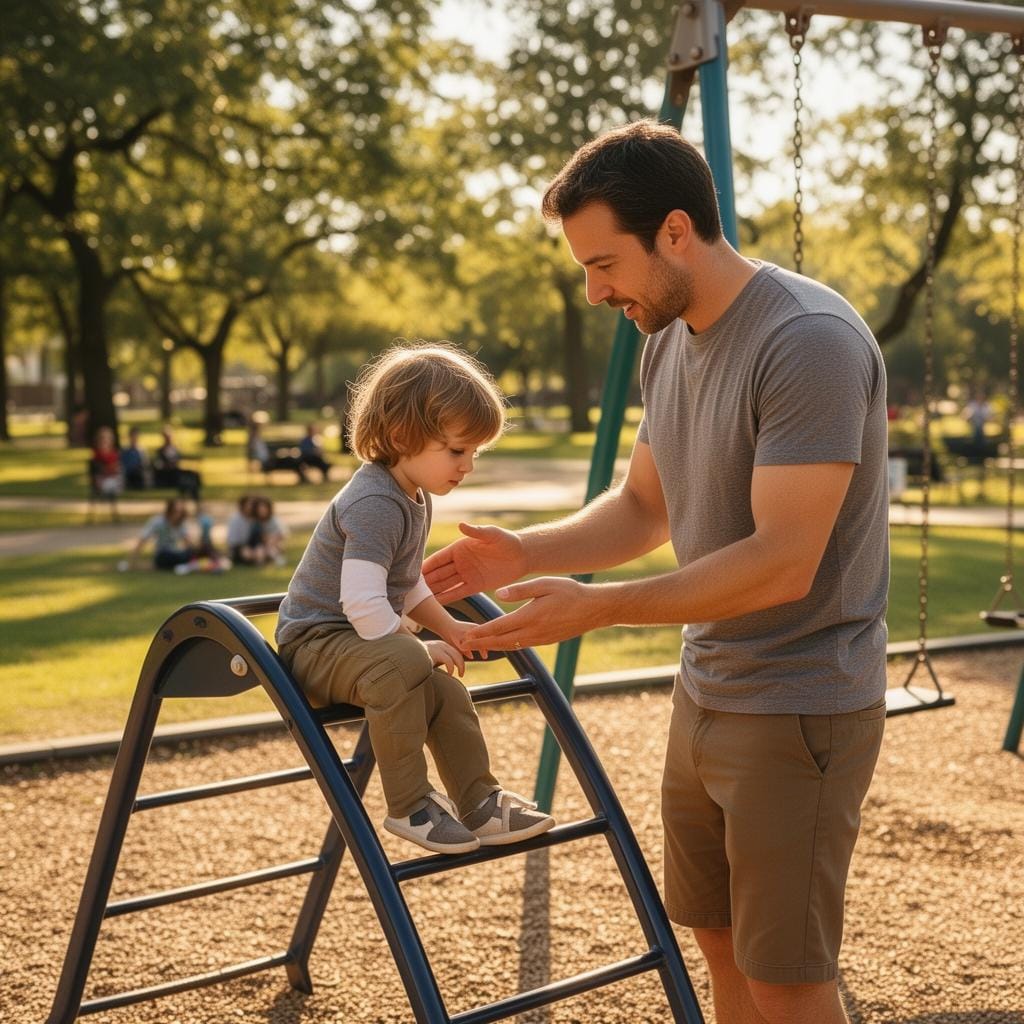
I used to hover. I'm not proud of it, but I did. Every time my daughter climbed a ladder at the playground, I was right behind her with both hands out like a goalkeeper. When my son tried to pour his own cereal, I'd swoop in before the first flake hit the floor. I thought I was being a good dad. Turns out, I was being an anxious one.
If you've ever caught yourself saying "be careful" fourteen times in a single park visit, this one's for you. Let's talk about how to raise confident kids without overparenting — and why stepping back is sometimes the bravest thing a dad can do.
What Is Overparenting, Really?
Overparenting — sometimes called helicopter parenting — is when we do too much for our kids in the name of protection. We solve their problems before they even know they have them. We micromanage their friendships, schoolwork, and playtime until there's no room left for them to figure anything out on their own.
And here's the kicker: it usually comes from love. We overparent because we care deeply. But the research is clear — kids who are overparented tend to struggle with anxiety, decision-making, and self-confidence as they grow up. The very thing we're trying to prevent is the thing we're creating.
A 2024 study published in the Journal of Child and Family Studies found that children of overprotective parents scored significantly lower on measures of self-efficacy and emotional regulation. They weren't less loved — they were less practiced at handling life.
Why Dads Are Uniquely Positioned to Get This Right
Here's something that doesn't get said enough: dads tend to be naturally good at encouraging healthy risk-taking. Research from the Father Involvement Research Alliance shows that fathers are more likely to engage in rough-and-tumble play, challenge children physically, and encourage them to try things that feel slightly scary.
That's not reckless — it's developmental gold. When your kid climbs a tree and you stand below saying "you've got this" instead of "get down right now," you're teaching them something no amount of structured learning can: I can trust myself.
But somewhere along the way, many of us started second-guessing that instinct. Social media, parenting forums, and the fear of being judged made us trade our gut feelings for anxiety-driven control. It's time to reclaim that natural dad confidence.
5 Practical Ways to Step Back Without Checking Out
1. Let Them Struggle (a Little)
When your child is trying to zip their coat, tie their shoes, or build a block tower that keeps falling — resist the urge to jump in. Sit on your hands if you have to. The frustration they feel isn't failure; it's the feeling of learning. Every time they push through a small struggle, they build a tiny piece of resilience that compounds over time.
Try this: next time your child asks for help, pause for 30 seconds before responding. Often, they'll figure it out themselves — and the pride on their face will be worth every second of your discomfort.
2. Replace "Be Careful" With Better Questions
Instead of the reflexive "be careful," try questions that make your child think critically about risk:
- "Do you feel safe up there?"
- "What's your plan for getting down?"
- "Do you notice how wobbly that branch is?"
These questions do something powerful: they shift responsibility for safety assessment from you to your child. You're not ignoring the risk — you're teaching them to evaluate it themselves. That skill will serve them far longer than any amount of hovering.
3. Allow Age-Appropriate Independence
A five-year-old can butter their own toast. A seven-year-old can walk to a neighbour's house. A ten-year-old can manage a simple recipe. We often underestimate what kids can handle because we're comparing them to the baby they used to be, not the capable person they're becoming.
Start small. Let them order their own food at a restaurant. Let them resolve a disagreement with a sibling before you step in. Each micro-moment of independence builds their internal sense of "I can handle this."
4. Get Comfortable With Imperfection
Your child's homework doesn't need to be perfect. Their bedroom doesn't need to look like a magazine spread. Their art project can have the eyes in the wrong place. When we correct everything, we send an unspoken message: your best isn't good enough without my input.
Confident kids aren't kids who do everything right — they're kids who know it's okay to do things imperfectly. Model this by sharing your own mistakes openly. "I burned dinner tonight. Oh well, let's do toast!" normalises imperfection in a way lectures never can.
5. Create 'Dad Challenges'
Turn independence into a game. Set up challenges that stretch your child just beyond their comfort zone:
- The Navigation Challenge: Let your child lead the way on a familiar walk.
- The Chef Challenge: They plan and (with supervision) prepare one meal a week.
- The Problem-Solver Challenge: When they bring you a problem, ask "What do you think you should do?" before offering advice.
These aren't just games — they're confidence-building exercises wrapped in fun. And they give you a natural framework for stepping back without feeling like you're abandoning your role.
The Hardest Part: Managing Your Own Anxiety
Let's be honest — the biggest obstacle to raising confident kids isn't your child's capability. It's your own fear. Fear that they'll get hurt. Fear that other parents will judge you. Fear that stepping back means you care less.
None of that is true. But knowing it intellectually and feeling it emotionally are two different things. Here are some strategies that helped me:
- Name the fear: "I'm not worried about her falling. I'm worried about being seen as a bad dad if she falls." Once you name it, it loses power.
- Talk to other dads: You'll quickly realise you're not alone. Apps like DadConnect make it easy to find fathers working through the same stuff.
- Remember your own childhood: You probably climbed trees, rode bikes without helmets, and survived. Your kids are more capable than your anxiety suggests.