The Block Tower That Changed Everything
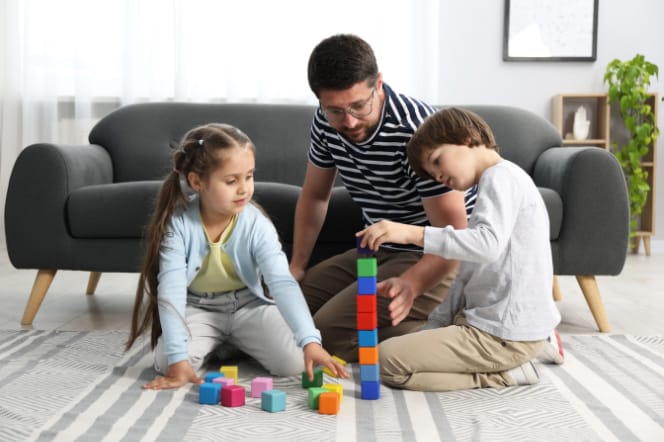
My daughter was three when she built her first proper block tower. Six blocks high — a personal record. She was so proud she called me over to look. And then, reaching for block number seven, the whole thing came crashing down.
She looked at me. I looked at her. And in that half-second pause, I realised something: whatever I said next was going to matter more than I thought. If you want to raise resilient kids, dad, those tiny moments are the ones that count.
I didn't say "it's fine" or "don't worry." I said, "Wow — that was a big tower. Want to try again?" She did. And the next one was seven blocks high.
Why Kids Are Afraid to Fail in the First Place
Kids aren't born afraid of failure. Watch a baby learning to walk — they fall dozens of times and never once consider quitting. The fear creeps in later, usually from us. Not because we're doing anything wrong, but because we care so much about protecting them from pain that we accidentally teach them pain is something to avoid at all costs.
Think about it. How many times have you jumped in to "help" before your child had the chance to struggle? I've done it a hundred times. Opening the jar before they ask. Finishing the puzzle piece they're rotating the wrong way. Catching the ball before it hits the ground. Every rescue sends a quiet message: you can't do this alone.
That's not what we mean, of course. But that's what they hear.
What Resilience Actually Looks Like at Home
Resilience isn't about toughness. It's not about telling your kid to "shake it off" or "try harder." It's about teaching them that failure is information, not identity. That getting something wrong doesn't make them wrong.
For dads especially, this can be a hard shift. A lot of us grew up with the message that struggling meant weakness. That you should figure it out quietly and not make a fuss. But that's not resilience — that's suppression. And there's a big difference.
Real resilience looks like a kid who tries something, fails, feels frustrated, talks about it, and then decides whether to try again. Every step in that chain matters — including the frustration. Especially the frustration.
Let Them Struggle (Within Reason)
This is the hardest part for me personally. Watching my kids struggle makes me physically uncomfortable. My son spent fifteen minutes trying to zip up his coat last winter. Fifteen minutes. I could feel my hand twitching.
But I waited. And when he finally got it, the look on his face was something I couldn't have given him by doing it for him. That's the thing about struggle — it's where confidence actually comes from. Not from praise, not from stickers, not from being told you're clever. From doing hard things and getting through them.
Obviously, there's a line. You don't let a toddler struggle with something dangerous. You don't leave a child in genuine distress. But most of the time, the discomfort we're feeling as parents is about our anxiety, not their safety.
If your child is working through frustration in a healthy way, the best thing you can do is stay close, stay calm, and stay quiet. They'll ask for help when they need it.
How You Talk About Your Own Failures Matters
Kids learn more from watching you than from anything you say. If you never talk about your own mistakes, they'll assume mistakes are something to hide. If you lose your temper when something goes wrong, they'll learn that failure is dangerous.
I started being more open about my own mess-ups at home. Small stuff, mostly. "I burnt the toast again — I always forget to turn down the heat. Let me try once more." Or, "I got a bit lost driving today. I should have checked the map first."
It feels silly at first, narrating your failures to a four-year-old. But they're listening. They're always listening. And what they're learning is: dad makes mistakes too, and it's not the end of the world.
This connects to something I've written about before — how to talk to your kids about emotions. When we model emotional honesty, we give kids permission to feel their own feelings without shame.
Praise the Process, Not the Result
You've probably heard this advice before, but it's worth repeating because it's genuinely hard to do in practice. When your child shows you a drawing, the instinct is to say "that's amazing!" When they score a goal, you shout "you're so talented!"
The problem with result-based praise is that it ties their self-worth to outcomes. And outcomes aren't always in their control. What is in their control is effort, strategy, and persistence. So that's what we should notice.
Instead of "great drawing," try "I can see you spent a lot of time on the sky — I love all the different blues." Instead of "you're so talented," try "you really kept going even when you missed those earlier shots."
It's a small shift in language that makes a massive difference over time. You're teaching them that the value is in the doing, not just the done.
Create Space for Safe Failure
One of the best things you can do as a dad is engineer situations where failure is low-stakes and learning is high. Cooking together is brilliant for this — nobody cares if the pancakes are wonky. Building things. Gardening. Board games where losing is just part of the fun.
These aren't groundbreaking activities. But they're contexts where kids can practise being bad at something without any real consequences. And the more they practise, the more comfortable they get with the feeling of not-knowing.
We also started having "oops of the day" at dinner, where everyone shares something that went wrong. It's become one of my favourite parts of the day. My son once said his oops was "I tried to carry three cups and dropped all of them." My daughter said hers was "I accidentally called my teacher mum." We laughed, nobody was embarrassed, and the message was clear: mistakes are just part of being alive.
What to Do When They Melt Down
Let's be honest — sometimes the block tower falls and the reaction isn't a calm "let me try again." Sometimes it's screaming, crying, and throwing blocks across the room. That's normal. That's what being three (or five, or seven) looks like.
When your child melts down after a failure, the temptation is to fix it. To rebuild the tower, solve the problem, make the tears stop. But what they actually need in that moment is connection, not correction.
Get down to their level. Acknowledge what they're feeling: "You're really upset that it fell down. You worked so hard on it." Wait for the storm to pass. And then — only then — ask if they want to try again or do something else. Both answers are fine.
If tantrums are a regular challenge, I wrote a deeper guide on how to handle toddler tantrums as a dad that might help with the bigger picture.
The Long Game
Raising kids who aren't afraid to fail isn't a one-conversation thing. It's not a strategy you implement on a Tuesday and tick off by Friday. It's a slow, daily practice of stepping back, staying present, and trusting that your child is more capable than your anxiety wants you to believe.
Some days you'll get it right. Some days you'll jump in too fast, say the wrong thing, or lose your patience. And that's okay — because your kids are watching that too. They're watching you fail and try again. And that might be the most powerful lesson of all.
You don't have to be a perfect dad. You just have to be a present one. And if you can let your kids see that failure isn't the opposite of success — it's part of it — you'll have given them something that'll carry them a lot further than any trophy or gold star ever could.