Let me paint a picture you probably know well. It's Saturday morning. The kitchen looks like a cereal bomb went off, there's laundry piling up, and your kids are tugging at your arm wanting to play. You're torn between getting stuff done and being a present dad.
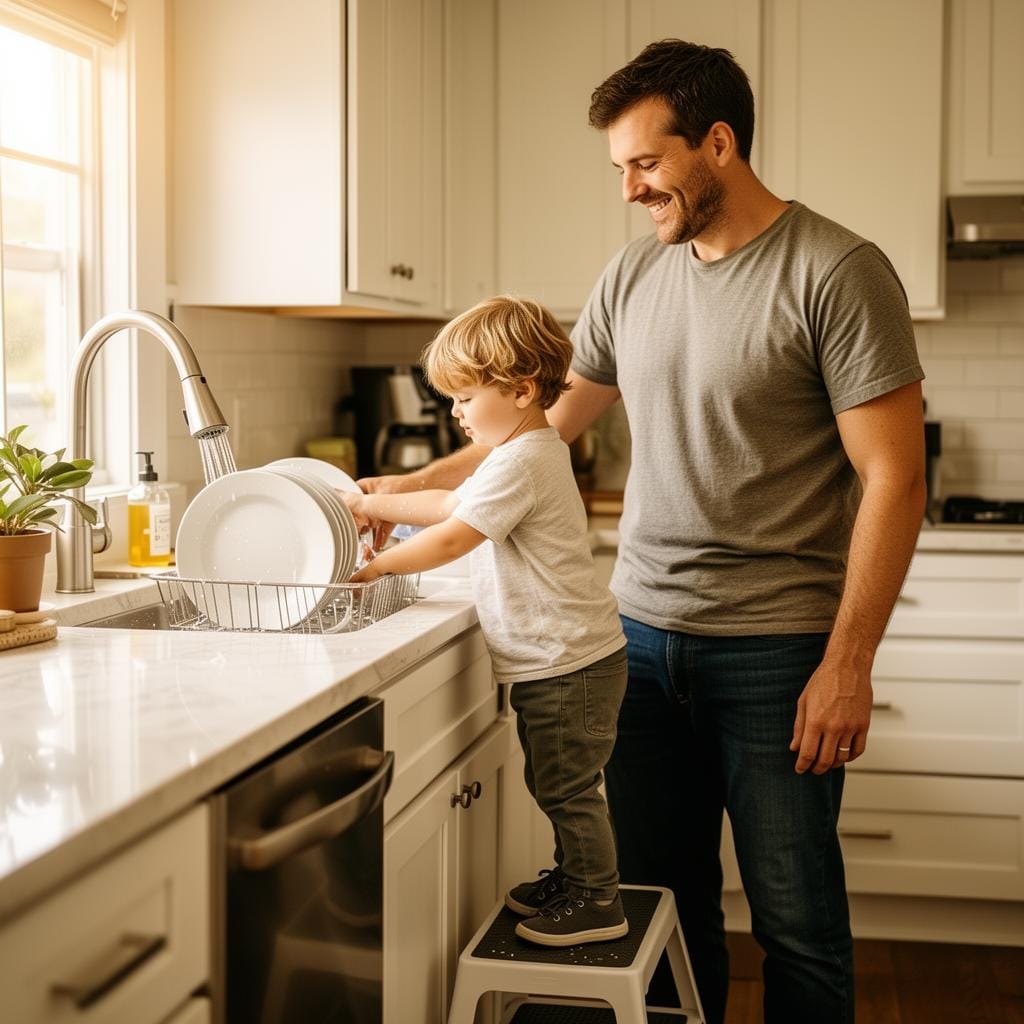
But here's the thing most dads don't realise: you don't have to choose. Some of the best bonding moments I've ever had with my kids happened while we were doing the most mundane tasks imaginable — washing dishes, folding laundry, even tidying the garden.
This isn't about turning your child into a mini cleaner. It's about reframing chores as shared experiences — and the research backs it up. A study from the American Psychological Association found that children who participate in household tasks alongside a parent develop stronger emotional bonds, better self-regulation, and a greater sense of responsibility.
Why Chores Are Actually Perfect for Bonding
Think about what makes a great bonding activity. It doesn't need to be expensive or elaborate. It needs three things: proximity, shared purpose, and conversation. Chores deliver all three naturally.
When you're washing the car together, you're side by side (proximity). You're working toward a shared goal (purpose). And because the task is repetitive and low-pressure, conversation flows naturally — your child might open up about something at school they'd never mention at the dinner table.
I remember my four-year-old telling me about a kid who'd been mean to her while we were sorting socks together. Sorting socks! If I'd sat her down for a "talk," she would have clammed up. But the casualness of the task made it safe.
Age-Appropriate Chore Bonding Ideas
Toddlers (Ages 2–4)
At this age, everything is a game. Lean into it.
- Sock matching: Turn it into a colour-matching game. "Can you find the one that looks like this?"
- Wiping surfaces: Give them a damp cloth and let them "clean" the table. They'll love imitating you.
- Putting toys away: Make it a race. "Can we get all the blocks in the box before I count to ten?"
- Watering plants: A small watering can gives them a sense of responsibility and wonder.
Young Kids (Ages 5–8)
This is the sweet spot. They're capable enough to genuinely help but still think hanging out with dad is the coolest thing ever.
- Cooking together: Let them measure ingredients, stir the pot, crack eggs (yes, it'll be messy). Talk about where the food comes from.
- Washing the car: Give them a sponge and a bucket. You'll both get soaked. That's the point.
- Gardening: Planting seeds teaches patience. Checking on them daily becomes a shared ritual.
- Setting the table: Teach them where everything goes — it's a small maths and spatial reasoning exercise too.
Older Kids (Ages 9–12)
They might roll their eyes, but they'll remember these moments.
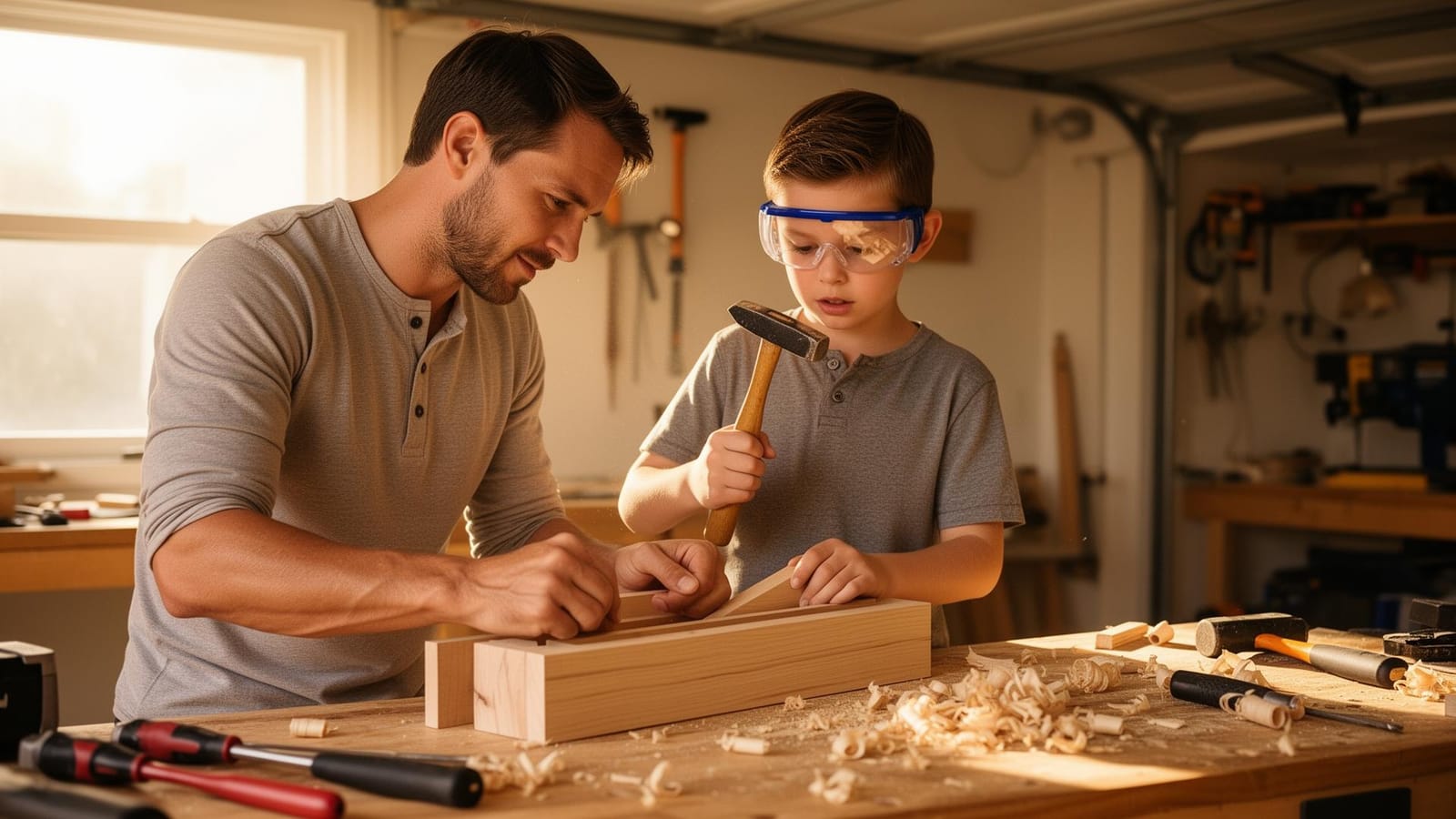
- DIY projects: Assembling furniture, fixing a shelf, painting a room. They learn real skills and you work as a team.
- Meal planning: Let them choose a recipe and shop for ingredients. It builds decision-making and budgeting skills.
- Organising their room: Do it together, not as a punishment. Put on music and make it an event.
- Yard work: Raking leaves, mowing (supervised), or building something in the garden.
The Secret: Make It Playful, Not Perfect
The biggest mistake dads make is treating chores-with-kids like chores-with-a-small-assistant. If you're focused on efficiency, you'll get frustrated when they do it "wrong." And they will do it wrong. That's completely fine.
The goal isn't a spotless kitchen. The goal is connection. Here's how to keep it fun:
- Add music: Create a "chore playlist" together. Let them pick songs. Dance while you sweep.
- Tell stories: "When I was your age, my dad used to make me..." Kids love hearing about your childhood.
- Gamify it: Time challenges, point systems, silly penalties for dropping a sock.
- Lower your standards: A bed made by a five-year-old won't look magazine-worthy. Praise the effort, not the result.
If you're already doing free weekend activities with your kids, adding chore-bonding into the mix is a natural extension — it just happens to also get the house sorted.
What the Research Says About Dads and Shared Tasks
A 2023 study published in the Journal of Family Psychology found that fathers who regularly include children in household routines report higher relationship satisfaction with their kids and lower parenting stress. The key factor? It wasn't the chore itself — it was the quality of interaction during the task.
Children who do chores with a parent (rather than alone) also show:
- Better teamwork skills at school
- Higher empathy scores
- Stronger sense of family identity
- Greater willingness to help others
In other words, you're not just tidying the house. You're building character.