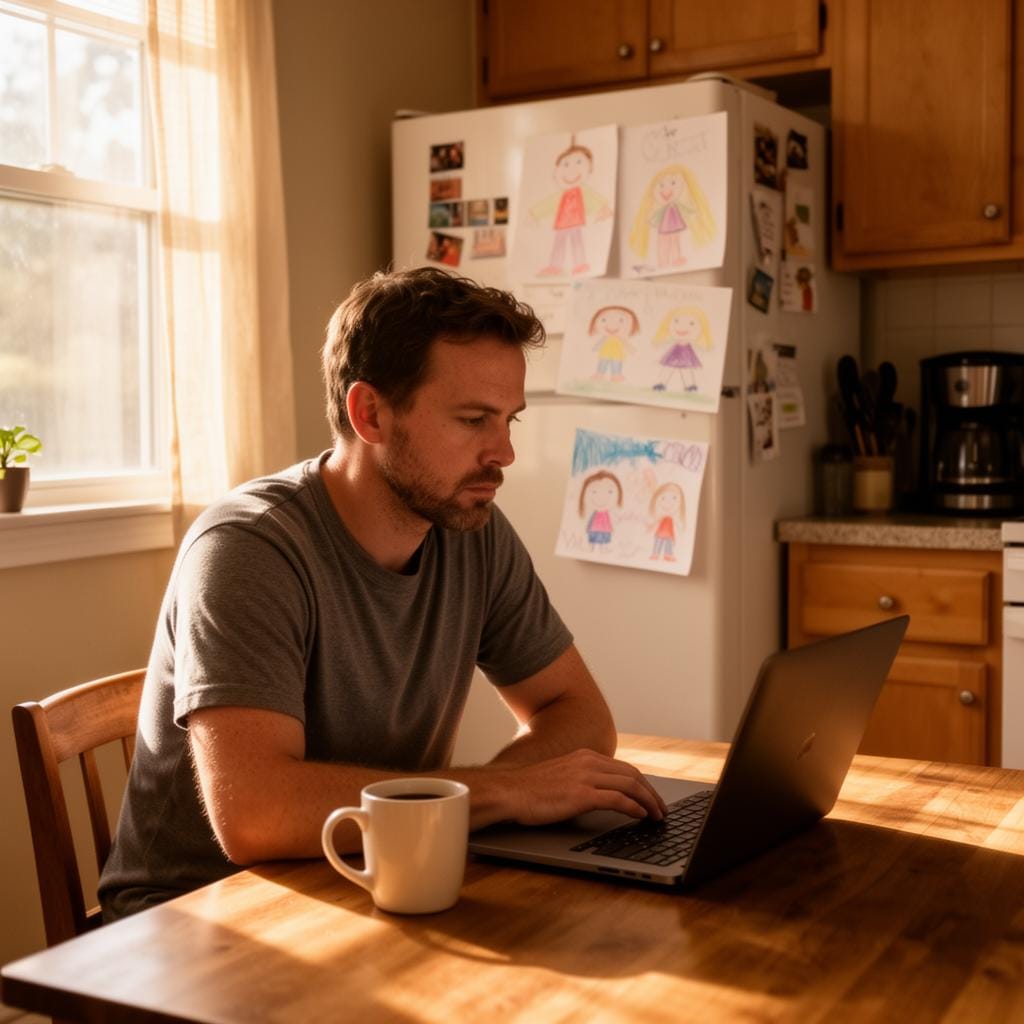
Stay-at-home father working at kitchen table with coffee and laptop, children's drawings on fridge behind him
Fatherhood Stories

What Nobody Tells You About Being a Stay-at-Home Dad in 2026

Richard8 min read

Part of our Work, Money, and Family Balance guide collection.

When I told people I was going to be a stay-at-home dad, the reactions fell into two categories. There were the "good for you" crowd — enthusiastic, progressive, slightly performative. And then there were the silent ones. The ones who nodded politely while their eyes said but what will you actually do all day?

I've been doing this for a while now. And I can tell you that the reality of being a stay-at-home dad in 2026 is nothing like what either group imagines. It's harder, stranger, more rewarding, and more isolating than any job I've ever had. Here's everything nobody told me.

The Invisible Labour Is Real — and It's Relentless

Before I stayed home, I thought childcare was the hard part. Feed them, change them, keep them alive, play with them. Repeat. What nobody mentioned was the mental load — the constant, invisible labour that runs underneath everything like background software eating up all your RAM.

It's remembering that Wednesday is library day. It's knowing which kid is growing out of which shoes. It's meal planning for humans who change their food preferences every 72 hours. It's scheduling dentist appointments, tracking vaccination dates, washing sheets, and noticing when the Calpol is running low — all while making it look like you're "just at home."

Mothers have been talking about this for years, and they're right. The invisible labour is exhausting not because any single task is hard, but because it never stops. There's no clocking off. There's no Friday feeling. The mental tab is always open.

Your Identity Will Shift — and That's Uncomfortable

I used to introduce myself with my job title. "I'm Richard, I work in marketing." Now when someone asks what I do, there's a half-second pause where my brain scrambles for an answer that doesn't sound defensive.

"I'm at home with the kids."

It shouldn't feel loaded, but it does. Because no matter how progressive our society claims to be, a man's worth is still quietly measured by his career. When you step away from that, you step away from one of the primary ways men in our culture build identity and self-esteem.

This isn't about regret — I don't regret it. But the identity shift caught me off guard. I had to actively rebuild my sense of self around something other than professional achievement. And that process was lonely, because very few people in my life understood what I was going through.

The Social Isolation Hits Harder Than You Expect

Here's the thing about stay-at-home parenting in 2026: the infrastructure is still overwhelmingly built for mums. Playgroups, baby classes, school gate conversations — these spaces are coded female, even when they don't mean to be. Nobody is hostile. But you feel like a guest in someone else's world.

I've sat in toddler music classes where I was the only dad in a room of thirty. I've been at the school gate where conversations pause slightly when I join. It's subtle, but it's isolating. And over time, that isolation compounds.

The research backs this up. A 2025 survey by the Modern Fatherhood Institute found that 67% of stay-at-home fathers reported feeling socially isolated, compared to 41% of stay-at-home mothers. The difference isn't just cultural — it's structural. The support networks simply aren't there yet for dads in the same way.

This is exactly why I became obsessed with finding other dads going through the same thing. Having even one dad friend who gets it can be transformative. And platforms like DadConnect exist specifically to bridge that gap.

People Will Question Your Competence Constantly

When a mum takes her kid to the doctor, nobody asks where the father is. When I take my kid to the doctor, I've been asked — more than once — "Is mum working today?"

It's not malicious. But it reveals an assumption: that I'm the backup parent. The substitute teacher. The understudy filling in while the real star is elsewhere. And after you hear it enough times, it starts to grind.

Strangers at the supermarket tell me I'm "babysitting." Other parents ask if I'm "giving mum a break." Teachers send emails addressed to my wife even though I'm the one who drops off and picks up every single day. The constant, low-level questioning of your competence as a father — when you're literally doing the job full-time — is one of the things nobody warns you about.

Your Relationship Will Change in Ways You Didn't Plan For

When one parent works and one stays home, the power dynamics shift in ways that feel uncomfortable to talk about. Suddenly, you're financially dependent on your partner. The person who earns the money carries an invisible authority, even in the most equal relationships.

My wife and I are a team. But there were moments — especially early on — where I felt like I had to justify purchases, or felt guilty about buying myself a coffee because it wasn't "my money." Those feelings are irrational, but they're real. And if you don't talk about them openly, they fester.

We had to renegotiate our relationship in real-time. We had to be explicit about things that previously went unsaid: who gets downtime, how we split evenings, what "work" counts as. If you're considering the stay-at-home route, know that maintaining your relationship requires genuine, ongoing effort from both sides.

The Rewards Are Quiet — but They're Profound

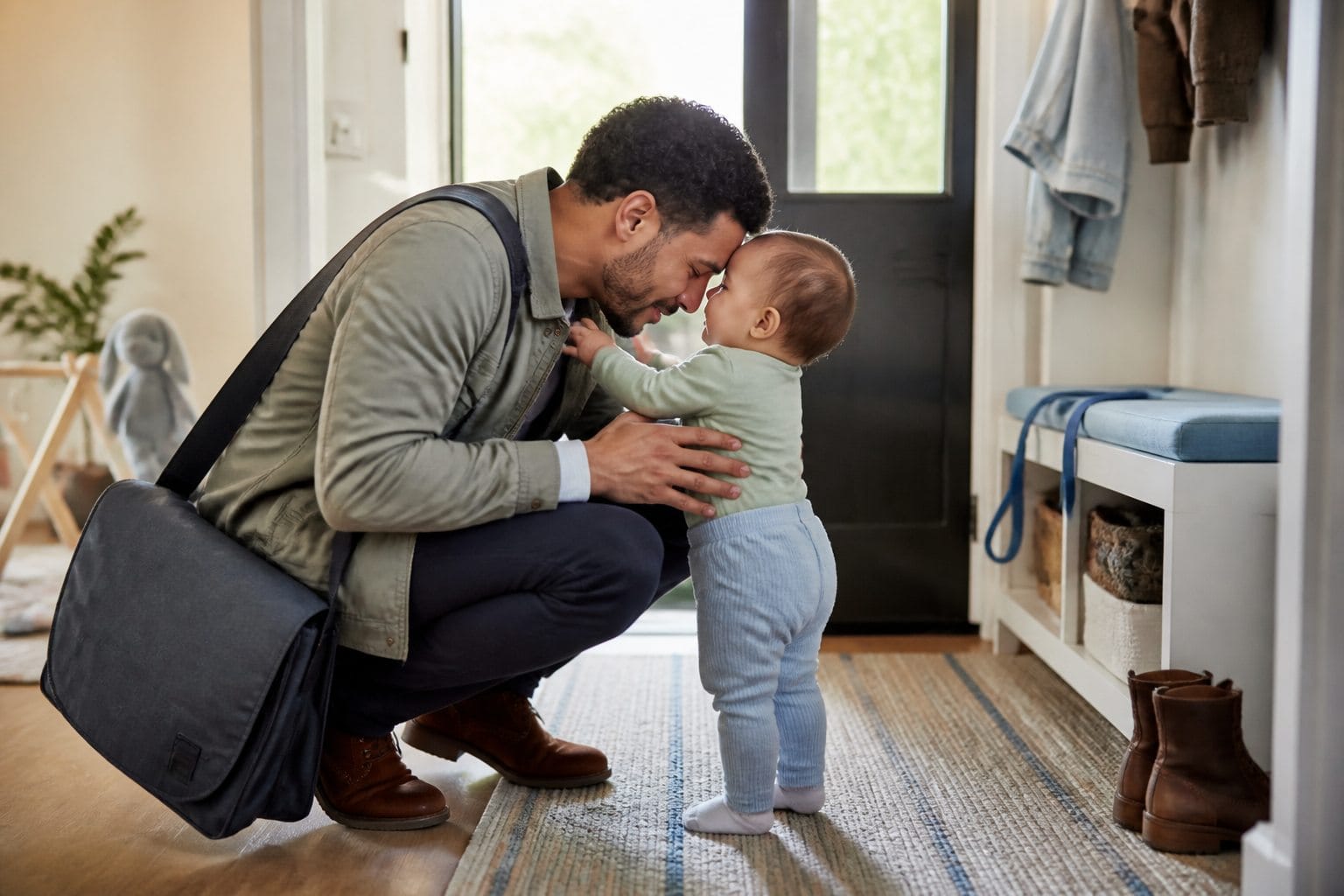
For all the hard parts, there's something that happens when you're the full-time parent that I can only describe as a deep knowing. You know exactly how your child falls asleep. You know their real laugh versus their performance laugh. You know the precise moment before a meltdown when redirection still works.

You witness the micro-moments that nobody else sees. The first time they share a toy without being asked. The conversation they have with their stuffed animals that reveals how they're processing the world. The way they reach for your hand without thinking, because you're their safe person.

These moments don't make LinkedIn. They don't impress anyone at dinner parties. But they are, without exaggeration, the most meaningful experiences of my life.

What I Wish Someone Had Told Me on Day One

If I could go back and talk to myself before I started this journey, here's what I'd say:

  • Build your tribe early. Don't wait until you're isolated to start looking for connection. Find other dads — online or offline — who understand. It's not optional; it's essential.
  • Protect your identity. You are not just "a stay-at-home dad." You're a person with interests, goals, and a life outside of nappies and school runs. Keep those things alive, even in small ways.
  • Talk about money. Have the awkward conversation with your partner about finances, spending, and value. Do it before resentment builds.
  • Lower your standards. The house will be messy. Meals will be uninspired. Some days, survival is the only goal — and that's enough.
  • Ask for help. From your partner, your family, your friends. Asking for help isn't weakness; refusing to is.
  • Own it. Say "I'm a stay-at-home dad" without adding qualifiers. Don't say "I'm at home for now" or "I used to work in..." You're doing something important. Act like it.

The Bigger Picture: Why This Matters Beyond Your Family

Every dad who stays home and does it well is quietly rewriting the cultural script. Your son sees that men can nurture. Your daughter sees that caregiving isn't gendered. Your neighbours see that a father at the school gate is normal, not notable.

We're in a transition period. Stay-at-home dads in 2026 are more common than ever, but we're still the exception, not the rule. And that means we carry the extra weight of being visible — of being the example that other families point to when they're making their own decisions.

That's a lot of pressure. But it's also a privilege. Because the version of fatherhood we're modelling today becomes the baseline for tomorrow.

You're Not Alone in This

If you're a stay-at-home dad reading this at 2pm while your toddler naps, feeling like you're the only person in the world doing this — you're not. There are thousands of us, scattered across neighbourhoods and time zones, navigating the same beautiful, messy, isolating, rewarding experience.

Find us. Talk to us. We get it.

Frequently Asked Questions

What is it really like being a stay-at-home dad in 2026?

Being a stay-at-home dad in 2026 involves managing invisible labour (scheduling, meal planning, household logistics), navigating social isolation in parent spaces still largely designed for mothers, dealing with identity shifts away from career-based self-worth, and experiencing profound but quiet rewards from deep involvement in your children's daily lives. It's more common than ever but still comes with unique challenges that working parents don't face.

Do stay-at-home dads feel isolated?

Yes — research shows that 67% of stay-at-home fathers report feeling socially isolated, compared to 41% of stay-at-home mothers. The gap exists because most parenting support networks, playgroups, and social spaces are still predominantly used by mothers. Building intentional connections with other dads through apps like DadConnect or local meetups is essential for combating this isolation.

How do stay-at-home dads handle the mental load?

Managing the mental load requires open communication with your partner about task distribution, using shared calendars or planning tools, lowering perfectionism standards, and actively scheduling personal downtime. Many stay-at-home dads find that acknowledging the mental load exists — rather than pretending it's not work — is the first step toward managing it sustainably.

What are the biggest challenges of being a stay-at-home dad?

The biggest challenges include social isolation from predominantly mother-focused parenting spaces, identity loss from stepping away from a career, financial dependence on a partner, constant questioning of competence from strangers and institutions, managing the invisible mental load of household logistics, and maintaining a healthy relationship when traditional roles are reversed.

Related reading: Discover 8 things nobody tells you about being a stay-at-home dad — the honest truths from real dads.

R

Written by

Richard

Dad of two and a member of the DadConnect editorial team. Richard writes from a father's perspective and is not presented as a medical professional.

Share:

Join a Community of Dads Like You

Connect with fathers who understand your journey, share real experiences, and find support whenever you need it.

Download DadConnect
Download on the App StoreGet it on Google Play
Fathers spending meaningful time with their children