Reviewed by Richard, dad of two — last updated May 2026.
Your baby is around 6 months, weaning is on the table, and you've ended up on a parenting forum at midnight arguing with yourself about whether peanut butter is safe yet, whether honey is the one that's actually dangerous, and what the deal is with eggs. Here's the dad-friendly cheat sheet — based on what the AAP, NHS, and allergy specialists currently recommend in 2026, not 1998 advice your aunt still quotes.
Quick answer
From around 6 months, once your baby can sit with support and shows interest in food, you can introduce most foods including eggs, smooth peanut butter, and strawberries. The one to wait on is honey — not before 12 months, because of botulism risk. Current allergy guidance encourages introducing common allergens early, not delaying them.
The 2026 rules in plain English
The big shift since you were a kid: experts now recommend introducing common allergens (egg, peanut, dairy, wheat, fish) earlier, not later. Delaying them was shown in the landmark LEAP study to actually increase the risk of food allergies, and both the AAP and the NHS now back early, intentional introduction once your baby is developmentally ready to wean (around 6 months).
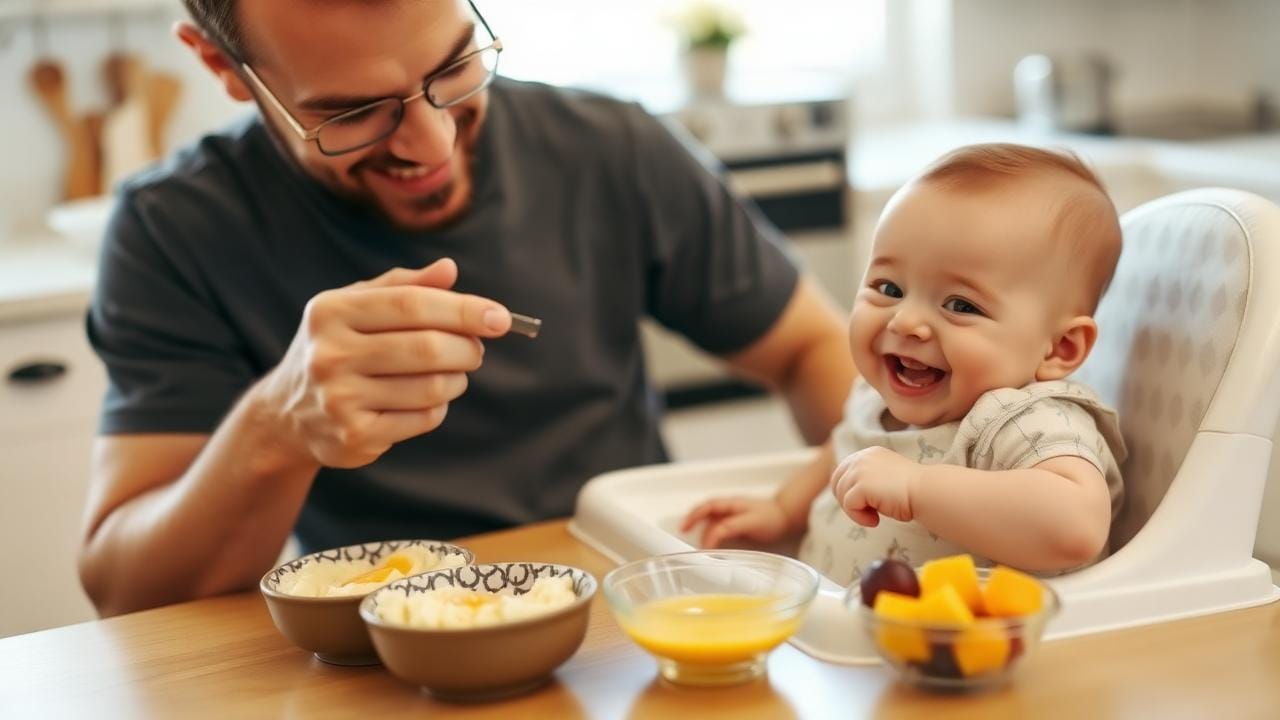
"Ready to wean" means: can sit with support, has good head control, shows interest in food (eyes following your fork), and has lost the tongue-thrust reflex. If you're still figuring out portions, our plain-English 6-month feeding guide covers the basics.
When can babies eat eggs?
From around 6 months, as one of the first foods you offer. Both white and yolk, fully cooked (hard-boiled, scrambled, or in baked goods). Avoid runny or undercooked eggs under 12 months because of salmonella risk — the same reason adults are told to be careful with raw cookie dough.
Practical first attempts:
- Quarter of a hard-boiled egg, smushed with a fork.
- Scrambled egg cut into finger-sized strips for baby-led weaning.
- Egg cooked into pancakes or a small omelette.
Egg is a top-9 allergen, so introduce it on a calm day at home when you can watch your baby for 2 hours after. Don't bury it inside a meal with three other new foods — you want to know what caused any reaction.
When can babies eat peanut butter?
From around 6 months, in the right form. The 2017 NIAID guidelines and current AAP advice both recommend early peanut introduction — between 4 and 11 months — to reduce allergy risk, especially if your baby has eczema or an existing egg allergy (talk to your pediatrician first in that case).
Critical: never give a baby whole peanuts or a spoon of straight peanut butter. It's a choking hazard. Safe formats:
- Smooth peanut butter thinned with warm water, breast milk, or formula into a runny paste.
- A thin smear on a strip of soft toast.
- Stirred into oatmeal or yoghurt.
- Peanut puffs (Bamba-style) that dissolve in the mouth.
Same rule as egg: introduce on a calm day at home, watch for 2 hours, and then offer it again regularly — 1 to 2 times a week — to keep the tolerance built up. Sporadic exposure isn't protective; consistent exposure is.
When can babies eat strawberries?
From around 6 months. The old advice to wait until 12 months for berries because they're "acidic" or "allergenic" has been retired. Strawberries are not a top allergen, and a bit of redness around the mouth from the acidity isn't an allergic reaction — it's just skin irritation, the same as tomato sauce.
How to serve safely:
- Under 9 months: mash, purée, or cut into very thin slivers.
- 9–12 months: quartered lengthways into small pieces.
- Over 12 months: still cut — round, firm fruit is a choking risk until about age 4.
Wash well, take the green tops off, and watch for the same 2-hour window the first time.