Reviewed by Richard, dad of two — last updated May 2026.
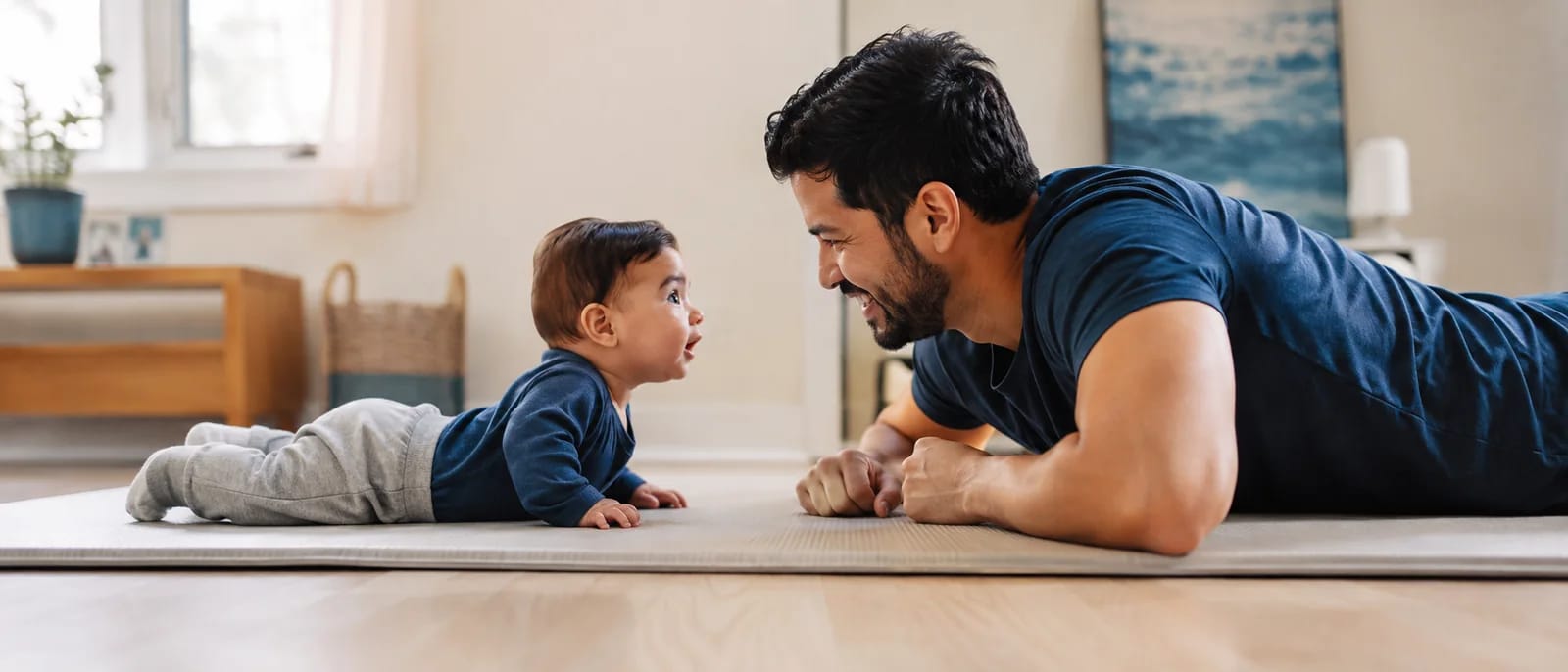
You've been watching your baby roll, push up, do that adorable plank, and you've started Googling "when do babies start crawling" because everyone else's kid at baby group is already doing laps. Take a breath. The honest answer is wider than the chart on the wall at your pediatrician's office — and there's plenty you, as the dad, can actually do to help.
Quick answer
Most babies start crawling between 7 and 10 months, with the average around 8 months. Some skip crawling entirely and go straight to cruising or walking — that's also normal. If your baby isn't moving themselves around in some way by 12 months, mention it at the next check-up.
The real crawling timeline (and why charts lie a little)
Pediatric guidance from the American Academy of Pediatrics and the NHS both put crawling in a wide window: 7–10 months for "classic" hands-and-knees crawling, with the broader range of independent movement stretching from 6 to 12 months. The reason charts feel stricter than reality is they show averages, not ranges. Your baby is a sample size of one.
Looking beyond movement milestones? Our guide to when babies start talking covers first words and the signs that come before them.
Here's roughly what the months look like in practice:
- 4–6 months: Tummy-time push-ups, rolling, the "swimming" pose where they kick and flap but don't go anywhere.
- 6–8 months: Commando crawl (dragging themselves with the forearms), rocking on hands and knees, pivoting in a circle.
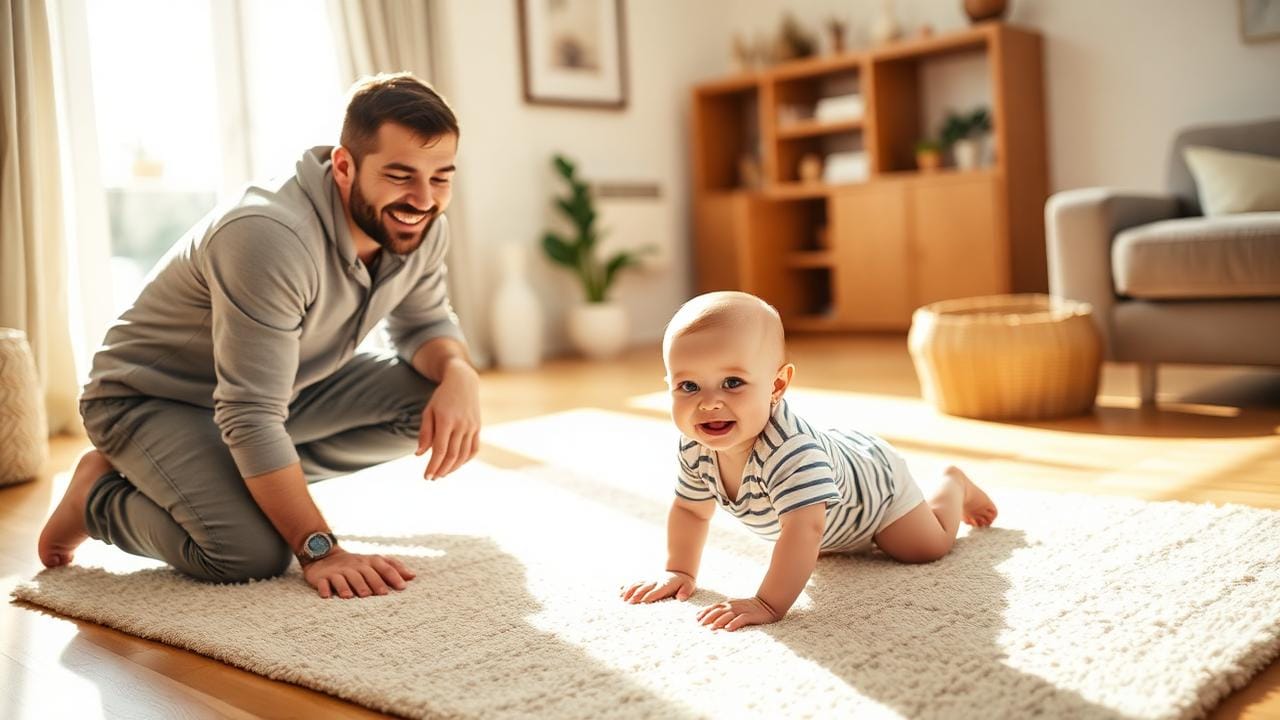
- 8–10 months: Classic hands-and-knees crawling, often with the comedy reverse-gear phase where they only go backwards for a week.
- 10–12 months: Faster crawling, pulling up to stand, cruising along the sofa. Some babies skip crawling and head straight here.
If you're also wrestling with the bigger sleep question while all this is happening, our honest sleep-through-the-night timeline is the companion read.
What are the early signs my baby is about to crawl?
You'll usually get a 2–4 week heads-up. Look for:
- Strong, sustained tummy time without a meltdown — they can prop up on their forearms for a few minutes.
- Rocking back and forth on hands and knees like they're revving up.
- Pushing back into a sitting position from their belly.
- Pivoting on their tummy to follow you across the room.
- Suddenly fascinated by something just out of reach — the remote, your phone, the dog's tail.
This last one matters more than anything: motivation is half of motor development. A baby who has no reason to move won't. Your job is to give them a reason.
Crawling styles are weirder than the chart shows
"Crawling" is a category, not a single move. Pediatricians recognise at least five legitimate styles, and any of them count as your baby being on the move:
- Classic crawl — hands and knees, alternating arm and opposite leg.
- Commando / belly crawl — dragging themselves with the forearms, belly on the floor.
- Bear crawl — hands and feet, bum in the air. Looks ridiculous, totally fine.
- Crab crawl — pushing sideways or backwards with one leg tucked under.
- Bum shuffle / scooting — sitting up and shuffling along on their bottom. Very common in the UK. The NHS notes bum-shufflers often walk a bit later but get there fine.
If your baby is moving themselves around the room one way or another by 9–10 months, the style doesn't matter.